How to Inspect Used Industrial Machinery Before Shipping
A practical pre-shipment inspection guide for international buyers of used CNC machines, woodworking equipment, ceramic machinery, hydraulic machines, and industrial production lines.
Buying used industrial machinery from China can offer opportunities to reduce initial equipment investment, expand production capacity, or acquire machinery that is no longer available as a new model.
However, the actual value of a second-hand machine depends on much more than its advertised price, manufacturing year, or external appearance.
A machine may look well maintained while containing worn bearings, damaged guide rails, outdated electrical components, missing accessories, or control-system problems.
For international buyers, these risks are particularly important because machinery may travel thousands of kilometers before it can be installed and tested again.
Once equipment has been dismantled, packed, and shipped, resolving unexpected problems can become expensive and time-consuming.
A structured pre-shipment inspection helps buyers identify technical risks, verify machine specifications, document equipment condition, and establish clear acceptance criteria before international transportation.
The purpose of a used machinery inspection is not simply to confirm that the machine can start. It is to determine whether the equipment is complete, safe to evaluate, technically suitable, capable of meeting agreed performance requirements, and ready for controlled dismantling and shipment.
This guide explains how to inspect used industrial machinery step by step, including documentation, mechanical components, electrical systems, controllers, hydraulics, safety, performance testing, and export preparation.
1. Why Inspect Used Industrial Machinery Before Buying?
Used industrial machinery may provide substantial economic value, but its condition can vary significantly.
1.1 Reduce the Risk of Hidden Defects
Some equipment problems are difficult to identify from supplier photographs or short demonstration videos.
Potential issues include excessive mechanical wear, electrical deterioration, lubrication failures, damaged control components, and previous repairs that were not properly documented.
Physical inspection and functional testing can reveal problems that would otherwise remain unnoticed until installation.
1.2 Verify That the Machine Matches the Quotation
A quotation may describe a particular model, manufacturing year, capacity, controller, or accessory package.
Inspection should confirm that the actual equipment matches the agreed specifications.
Important differences can include missing tooling, replacement controllers, altered motors, incomplete auxiliary systems, or undocumented modifications.
1.3 Evaluate Real Operating Performance
A machine’s original rated capacity does not necessarily reflect its present condition.
Wear, poor maintenance, and outdated components can reduce accuracy, production speed, or reliability.
Testing with representative materials helps establish whether the machine can meet the buyer’s requirements.
1.4 Reduce Relocation Risks
Used machinery often requires dismantling, lifting, transportation, reassembly, and recommissioning.
Inspection before dismantling helps document its original operating condition and provides essential information for relocation.
1.5 Understand the Total Investment
The true cost of used machinery may include repairs, replacement parts, export packing, freight, installation, and downtime.
Inspection findings support a more realistic investment calculation.
2. Step One: Verify Machine Identity and Documentation
Before examining the internal components, confirm exactly what equipment is being offered.
2.1 Identify the Manufacturer and Model
Record the following information:
- Manufacturer name
- Model designation
- Serial number
- Manufacturing year, where available
- Machine type
- Rated specifications
- Installed power
- Controller model
- Current equipment location
Compare the machine nameplate with the seller’s quotation and available records.
2.2 Verify Ownership and Sales Authority
Confirm the identity of the company selling the equipment and whether it has authority to complete the sale.
The contractual seller, equipment owner, and payment recipient should be clearly identified.
2.3 Review Technical Documentation
Request available documents such as:
- Operation manuals
- Maintenance manuals
- Electrical diagrams
- Hydraulic and pneumatic diagrams
- Mechanical drawings
- Spare-parts lists
- Controller documentation
- Machine parameter backups
- Maintenance records
- Repair history
Missing documentation can increase future troubleshooting and installation costs.
2.4 Check Machine Configuration and Accessories
Confirm whether the equipment includes the accessories necessary for its intended operation.
For example, a used CNC machine may require tool holders, tool changers, vacuum pumps, dust extraction connections, or specialized software.
A used production line may require conveyors, control cabinets, sensors, and other auxiliary equipment.
2.5 Documentation Checklist
Inspection Item | Verification Requirement |
Manufacturer | Nameplate and supporting records |
Model | Exact model and configuration |
Serial number | Consistent identification |
Manufacturing year | Available supporting evidence |
Seller | Legal identity and sales authority |
Machine specifications | Match the quotation |
Manuals | Available and legible |
Electrical drawings | Available and relevant |
Maintenance records | History of service and repairs |
Accessories | Included equipment list |
Controller | Model, version and access |
Software | Licenses, backups and transferability |
3. Step Two: Inspect Mechanical Components
Mechanical condition directly affects accuracy, reliability, maintenance costs, and equipment service life.
3.1 Machine Frame and Structure
Inspect the main frame, base, welded joints, mounting points, and supporting structures.
Look for cracks, deformation, corrosion, damaged welds, and unusual repairs.
Structural damage can affect alignment and machine safety.
3.2 Bearings and Spindles
Bearings and spindles should be evaluated for abnormal noise, vibration, overheating, and excessive movement.
For CNC and woodworking machinery, spindle condition is especially important because it affects machining quality and tool life.
Where appropriate, qualified inspectors should measure spindle runout or other relevant performance indicators.
3.3 Guide Rails and Motion Systems
Inspect linear guides, slides, ball screws, racks, gears, and related components.
Common warning signs include:
- Excessive backlash
- Uneven movement
- Surface scoring
- Corrosion
- Damaged lubrication points
- Positioning errors
3.4 Conveyors and Material Handling Systems
For machinery using conveyors, inspect belts, rollers, chains, drive motors, gearboxes, and alignment systems.
Damaged conveyors may cause product defects, material jams, or production interruptions.
3.5 Lubrication Systems
Verify that lubrication pumps, reservoirs, distribution lines, and relevant sensors operate correctly.
Poor lubrication can accelerate wear in bearings and motion systems.
3.6 Mechanical Inspection Checklist
Component | Potential Problem | Inspection Method |
Machine frame | Cracks or deformation | Visual and dimensional checks |
Spindle | Runout, noise, vibration | Measurement and operational test |
Bearings | Wear or overheating | Operational assessment |
Guide rails | Scoring or corrosion | Visual and motion inspection |
Ball screws | Backlash or uneven movement | Positioning test |
Gearboxes | Leakage or abnormal noise | Operational inspection |
Conveyors | Misalignment or wear | Running inspection |
Lubrication | Blockage or inadequate supply | System verification |
4. Step Three: Check Electrical Systems
Electrical condition is essential for both reliable operation and safety.
Electrical inspection should be performed by qualified personnel using appropriate isolation and testing procedures.
4.1 Inspect the Electrical Cabinet
Check for dust, moisture, corrosion, damaged wiring, overheating marks, loose connections, and unauthorized modifications.
4.2 Verify Motors and Drives
Identify the installed motors, variable-frequency drives, servo drives, and associated control components.
Check for fault alarms, abnormal operating behavior, and evidence of previous repairs.
4.3 Inspect Cables and Connectors
Look for damaged insulation, improper routing, exposed conductors, and unsuitable cable repairs.
4.4 Test Sensors and Limit Switches
Verify that sensors, position switches, and relevant safety interlocks function as intended.
4.5 Confirm Destination Power Compatibility
Electrical requirements should be checked against the buyer’s factory.
Confirm:
- Voltage
- Frequency
- Phase configuration
- Connected load
- Earthing requirements
- Control voltage
- Applicable electrical standards
A machine designed for one electrical supply may require engineering modifications before use in another country.
5. Step Four: Inspect Control Systems and Software
Modern industrial machinery often depends on PLC, CNC, servo, and human-machine interface systems.
5.1 Identify the Controller
Record the controller manufacturer, model, software version, and relevant configuration details.
5.2 Test the Human-Machine Interface
Verify that the screen, controls, alarms, menus, and operating functions respond correctly.
5.3 Review Machine Parameters
Request available backups of CNC parameters, PLC programs, machine settings, and other essential configuration data.
5.4 Confirm Software Availability
Some machinery requires specialized software or licenses.
Buyers should confirm whether these are included, supported, and legally transferable.
5.5 Evaluate Obsolescence Risks
Older controllers, drives, and electronic modules may no longer be supported by their original manufacturers.
Check whether compatible replacement components are available.
5.6 Verify Communication Interfaces
For equipment intended to operate in a production line, confirm compatibility with existing machines and automation systems.
6. Step Five: Inspect Hydraulic and Pneumatic Systems
Hydraulic and pneumatic systems are common in presses, cutting machines, lifting equipment, and industrial automation.
6.1 Hydraulic Pumps and Valves
Inspect for leakage, abnormal noise, overheating, pressure instability, and contamination.
6.2 Hydraulic Cylinders
Check cylinder rods, seals, mountings, and movement.
Look for scoring, corrosion, leakage, or irregular operation.
6.3 Hydraulic Fluid
Fluid condition may indicate maintenance quality or contamination.
For high-value machinery, laboratory fluid analysis may be appropriate.
6.4 Pneumatic Systems
Inspect air cylinders, valves, regulators, hoses, fittings, and air preparation equipment.
6.5 Stored Energy Hazards
Hydraulic and pneumatic systems may retain dangerous pressure after shutdown.
Inspection must follow appropriate isolation and energy-release procedures.
7. Step Six: Perform Machine-Specific Inspection
General inspection is necessary, but different machinery categories require additional technical checks.
7.1 Used CNC Machinery
Inspect:
- Spindle condition
- Axis positioning accuracy
- Backlash
- Servo systems
- Tool changer
- Controller
- Lubrication
- Coolant or extraction systems
- Repeatability
- Machining quality
Where practical, perform a test using representative materials and machining programs.
7.2 Used Woodworking Machinery
For CNC routers, edge banders, panel saws, and drilling equipment, inspect the components relevant to the process.
For example:
CNC routers: Spindle, vacuum table, axes, tool changer, and machining accuracy.
Edge banders: Glue application, pressure rollers, trimming units, scraping systems, and finished edge quality.
Panel saws: Blade assembly, guides, positioning, squareness, and cutting accuracy.
Drilling machines: Drill units, positioning, hole accuracy, and control functions.
7.3 Used Ceramic Machinery
For ceramic cutting, polishing, grinding, or glazing equipment, evaluate the process-specific components.
Important checks may include cutting spindles, polishing heads, conveyors, water systems, hydraulic components, and actual processing quality.
7.4 Used Hydraulic Presses
Hydraulic presses require specialist assessment of structural integrity, pressure systems, alignment, controls, and safety systems.
7.5 Used Industrial Production Lines
For complete lines, inspect individual machines and the interfaces between them.
Verify conveyors, sensors, control communication, production capacity, and equipment completeness.
8. Step Seven: Conduct a Functional Performance Test
A functional test helps determine whether the machine meets the buyer’s intended production requirements.
8.1 Use Representative Materials
Whenever possible, test the equipment using materials similar to those used in the destination factory.
8.2 Measure Accuracy
Depending on machine type, assess:
- Dimensional accuracy
- Positioning accuracy
- Repeatability
- Surface finish
- Cutting quality
- Hole position
- Edge quality
8.3 Record Production Output
Measure actual production capacity under defined operating conditions.
8.4 Monitor Machine Behavior
Observe noise, vibration, temperature, leakage, and control-system alarms.
8.5 Repeat Tests
Multiple test cycles provide better evidence of repeatability than a single successful operation.
8.6 Document Results
Record:
- Test conditions
- Material specifications
- Operating parameters
- Production output
- Quality measurements
- Observed defects
- Photographs and videos
- Acceptance status
8.7 Functional Test Checklist
Test | Purpose |
Startup and shutdown | Verify basic operation |
Axis movement | Check motion stability |
Controller functions | Confirm programmed operations |
Processing test | Evaluate actual machining capability |
Accuracy measurement | Compare with agreed tolerances |
Repeated cycles | Evaluate consistency |
Load test | Assess operation under representative conditions |
Safety function verification | Check protective systems |
Alarm review | Identify reported faults |
9. Step Eight: Evaluate Safety and Compliance
Safety assessment should be included in every used machinery purchasing decision.
9.1 Inspect Protective Devices
Check guards, emergency stops, interlocks, warning devices, and other protective systems.
9.2 Identify Previous Modifications
Previous owners may have modified electrical systems, controls, or mechanical structures.
Such modifications should be evaluated for safety and technical suitability.
9.3 Review Destination-Country Requirements
Import and installation requirements vary by country.
Depending on the destination, relevant obligations may include machinery safety, electrical conformity, environmental controls, and workplace requirements.
9.4 Verify Documentation
Review available declarations, manuals, risk assessments, and technical documentation.
Do not assume that a machine’s original certification automatically satisfies requirements for a new installation.
9.5 Address Critical Safety Defects
Machinery with unresolved critical safety defects should not be operated for routine production.
Qualified specialists should assess corrective actions before acceptance.
10. Step Nine: Evaluate Spare Parts and Technical Support
A used machine can become difficult to maintain if critical components are obsolete.
10.1 Identify Critical Spare Parts
Examples include controllers, servo drives, spindles, bearings, hydraulic pumps, sensors, motors, and special tooling.
10.2 Confirm Availability
Determine whether original or suitable compatible replacement parts are available.
10.3 Evaluate Maintenance Capability
Consider whether technicians in the destination country can service the equipment.
10.4 Estimate Maintenance Costs
Where reliable information is available, include likely maintenance and replacement costs in the purchase evaluation.
11. Step Ten: Plan Dismantling, Packing, and Reinstallation
Pre-shipment inspection should be completed before machinery is dismantled whenever practical.
11.1 Document the Original Installation
Photograph equipment positioning, cable connections, pipe routing, auxiliary systems, and important alignment references.
11.2 Prepare a Dismantling Plan
The plan should identify:
- Dismantling sequence
- Equipment weights
- Lifting points
- Required lifting equipment
- Component labeling
- Protective measures
- Packing method
- Transportation constraints
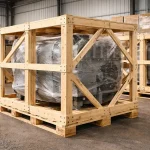
11.3 Protect Sensitive Components
Controllers, electrical cabinets, precision guides, sensors, and exposed mechanical surfaces may require special protection.
11.4 Prepare an Equipment Packing List
The packing list should identify individual machines, components, accessories, and packages.
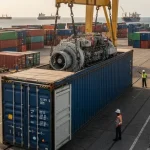
11.5 Confirm Shipping Requirements
Verify packed dimensions, gross weights, loading method, container suitability, and any special cargo requirements.
11.6 Plan Reinstallation
Clarify responsibility for unloading, positioning, assembly, electrical connections, alignment, commissioning, and operator training.
12. Common Problems Found in Used Industrial Machinery
12.1 Mechanical Wear
Worn bearings, guide rails, spindles, and transmission components may affect accuracy and reliability.
12.2 Corrosion
Moisture, chemicals, or poor storage conditions can damage structural and electrical components.
12.3 Electrical Deterioration
Damaged wiring, aging components, and unsuitable repairs can create reliability and safety problems.
12.4 Missing Accessories
Essential tooling, controllers, pumps, conveyors, or auxiliary equipment may be excluded from the sale.
12.5 Incomplete Documentation
Missing manuals and diagrams can increase installation and troubleshooting costs.
12.6 Performance Loss
Machines may no longer achieve their original accuracy, speed, or output.
12.7 Obsolete Controls
Older electronic systems may have limited technical support and spare-parts availability.
12.8 Safety Deficiencies
Missing guards, bypassed interlocks, and undocumented modifications may require corrective work.
13. How to Prepare a Used Machinery Inspection Report
An inspection report should provide clear evidence to support the purchasing decision.
13.1 Equipment Identification
Record manufacturer, model, serial number, location, and configuration.
13.2 Inspection Scope
List which systems were inspected and which were excluded.
13.3 Findings and Evidence
Include photographs, measurements, test results, and relevant observations.
13.4 Defect Classification
A practical classification may include:
Critical Defects: Safety-related issues or defects preventing acceptable operation.
Major Defects: Problems requiring significant repair, replacement, or engineering work.
Minor Defects: Issues that should be corrected or monitored but do not immediately prevent acceptable operation.
13.5 Corrective Actions
Identify recommended repairs and further investigations.
13.6 Final Inspection Status
The report may conclude that the equipment:
- Meets the agreed acceptance criteria
- Requires corrective action
- Requires additional specialist assessment
- Should not be accepted in its present condition
A pre-shipment inspection report describes the condition observed at the time of inspection. It is not a guarantee of future performance.
14. How to Calculate the Real Cost of Used Machinery
A lower purchase price does not necessarily mean a better investment.
14.1 Equipment Acquisition Cost
Include the agreed machinery price and any additional accessories.
14.2 Repair and Refurbishment Cost
Estimate the cost of replacing worn or defective components.
14.3 Transportation Cost
Include dismantling, packing, freight, insurance, customs charges, and inland delivery where applicable.
14.4 Installation and Commissioning
Include labor, technical support, utilities, alignment, and testing.
14.5 Downtime and Operating Risk
Consider possible production delays and maintenance interruptions.
14.6 Total Cost Formula
Total Project Cost = Purchase Price + Inspection + Repairs + Dismantling + Packing + Freight + Import Charges + Installation + Commissioning + Contingency
Use consistent assumptions when comparing alternative machines.
15. Frequently Asked Questions
Why is pre-shipment inspection important for used machinery?
It helps buyers verify equipment identity, technical condition, completeness, operating performance, and potential risks before international transportation.
Can I inspect used industrial machinery remotely?
Remote inspections can help review documentation, equipment appearance, and selected operating functions. However, they may not reveal all mechanical, electrical, or safety defects.
Should used machinery be tested before dismantling?
Yes, whenever practical. Testing before dismantling provides evidence of the equipment’s operating condition.
What should I inspect on a used CNC machine?
Important checks include spindle condition, guide systems, axis accuracy, controller functions, electrical systems, lubrication, and machining performance.
What should I inspect on used woodworking machinery?
Inspection depends on machine type but may include cutting or drilling accuracy, spindle condition, conveyors, glue application systems, controls, and safety devices.
How can I verify the age of used machinery?
Review the machine nameplate, serial number, manufacturer records where available, and supporting documents. Manufacturing year claims should be verified rather than assumed.
Are spare parts available for older industrial machines?
Availability depends on the manufacturer, model, and component type. Buyers should confirm critical spare-parts availability before purchase.
Can used industrial machinery be imported from China?
Used machinery can be imported into many markets, subject to local customs, safety, environmental, and equipment regulations. Requirements must be confirmed for the destination.
Does an inspection guarantee that a used machine will not fail?
No. Inspection reduces uncertainty and documents observed conditions, but it cannot eliminate all future operating risks.
What documents should be included with a used machine?
Depending on equipment type, useful documents include manuals, electrical drawings, maintenance records, spare-parts lists, software backups, inspection reports, and packing lists.
16. Source Used Industrial Machinery with Machrix
Buying used industrial machinery requires careful technical and commercial evaluation.
A suitable machine should meet the buyer’s production requirements, operate within acceptable performance limits, have adequate documentation, and be practical to transport and reinstall.
Machrix Industrial is a Foshan-based machinery sourcing business focused on connecting international buyers with Chinese machinery and industrial tool suppliers.
Our sourcing scope includes new and used machinery for furniture manufacturing, ceramic processing, and related industrial applications.
Send Us Your Machinery Requirements
Please provide:
- Machinery type
- Preferred manufacturer and model
- Required processing application
- Material specifications
- Production capacity
- Technical requirements
- New or used preference
- Inspection expectations
- Budget range
- Destination country
- Installation and support needs
Contact Machrix Industrial
Website: https://machrix.com/
Email: sales@machrix.com
Machinery availability, supplier selection, inspection arrangements, equipment condition, and commercial terms are subject to confirmation for each project.