Understanding EXW, FOB and CIF: A Practical Guide for Machinery Buyers
When buying woodworking machinery, ceramic manufacturing equipment or industrial tools from China, the product price is only one part of the total purchasing cost. Freight, export procedures, insurance, customs clearance and destination charges can all affect your final budget.
Three commonly used international trade terms are EXW, FOB and CIF. Each defines different responsibilities for the seller and buyer, including delivery arrangements, costs and the point at which the risk of loss or damage transfers.
Understanding these differences can help you compare supplier quotations more accurately and choose a shipping arrangement that fits your experience, budget and import requirements.
In this guide, Machrix Industrial explains how EXW, FOB and CIF work, how they apply to machinery purchases from China, and what buyers should check before confirming an order.
1. What Are EXW, FOB and CIF?
EXW, FOB and CIF are Incoterms® rules published by the International Chamber of Commerce (ICC). They establish agreed responsibilities between sellers and buyers in an international sales contract.
They are not simply different pricing formats. They also determine important delivery, cost-allocation and risk-transfer responsibilities.
What Is EXW (Ex Works)?
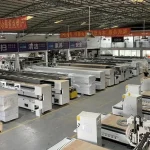
Under EXW, the seller makes the goods available to the buyer at the agreed place, typically the seller’s factory or warehouse.
The buyer generally assumes responsibility for arranging transportation from that point, export clearance, international shipping, import clearance and delivery to the final destination.
What EXW means for machinery buyers:
- The supplier makes the machinery available at the agreed location.
- The buyer arranges collection and transportation.
- The buyer generally handles export and import formalities.
- The buyer bears the relevant costs and risks according to the agreed EXW rule.
EXW may suit experienced importers with established freight-forwarding arrangements. However, export clearance can be complicated when the buyer is located overseas and cannot directly handle the necessary procedures in China.
Before choosing EXW, confirm whether the supplier can assist with loading, export documentation and other practical arrangements. If the seller is expected to load the goods or clear them for export, consider whether FCA would better reflect the intended responsibilities.
What Is FOB (Free On Board)?
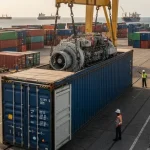
FOB is intended for sea and inland waterway transport. Under FOB, the seller delivers the goods on board the vessel nominated by the buyer at the agreed port of shipment.
The seller generally handles export clearance and the delivery obligations required to place the goods on board. The buyer arranges the main sea freight, import clearance and onward transportation.
What FOB means for machinery buyers:
- The seller handles the agreed delivery obligations up to loading on board.
- The buyer nominates or arranges the vessel and main sea freight.
- The buyer generally manages import clearance and destination delivery.
- Risk transfers when the goods are on board the vessel at the named port of shipment.
FOB is commonly used in quotations for machinery shipped by sea. It can be useful when a buyer already works with a freight forwarder or wants more control over the main shipping arrangement.
For containerized machinery, however, FCA may be more appropriate than FOB because the seller often hands the container to a carrier at a terminal before the container is loaded onto the vessel. Discuss the actual delivery arrangement with your supplier and logistics provider.
What Is CIF (Cost, Insurance and Freight)?
CIF is also intended for sea and inland waterway transport. Under CIF, the seller arranges and pays for the cost of carriage and the required minimum insurance to the named destination port.
However, the seller’s payment of freight to the destination does not mean that the seller retains the shipping risk until the goods arrive.
Under CIF, risk generally transfers to the buyer when the goods are loaded on board the vessel at the port of shipment. The seller arranges the freight and insurance, while the buyer generally handles import clearance, applicable duties and taxes, and onward delivery.
What CIF means for machinery buyers:
- The seller arranges and pays for sea freight to the named destination port.
- The seller obtains the insurance cover required by the CIF rule.
- The buyer generally handles import clearance and destination delivery.
- Risk transfers at the port of shipment, not when the goods arrive at the destination port.
CIF may be convenient for buyers who want the supplier to arrange the main sea freight. Nevertheless, you should confirm the insurance coverage, destination charges, arrival procedures and the limits of the seller’s responsibility.
2. EXW vs FOB vs CIF: Key Differences
The following table provides a practical overview. The exact allocation of obligations should always be checked against the agreed Incoterms® rule, named place or port, and sales contract.
Item | EXW | FOB | CIF |
Seller makes goods available | At the agreed place | Delivers goods on board the vessel | Delivers goods on board the vessel |
Export clearance | Generally buyer | Generally seller | Generally seller |
Main sea freight | Buyer | Buyer | Seller arranges and pays |
Seller’s insurance obligation | No general requirement under EXW | No general requirement under FOB | Seller obtains required minimum cover |
Risk transfers | When goods are placed at buyer’s disposal under the rule | When goods are on board at shipment port | When goods are on board at shipment port |
Import customs clearance | Buyer | Buyer | Buyer |
Destination charges and onward delivery | Generally buyer | Generally buyer | Generally buyer, subject to the contract and carriage arrangements |
Typical consideration | Buyer controls logistics | Buyer controls main sea freight | Seller arranges main sea freight |
Important: CIF includes freight and specified insurance costs to the named destination port, but it does not automatically include all destination handling, customs duties, import taxes, unloading or final delivery charges.
3. Which Incoterm Is Best for Machinery Buyers?
There is no single best Incoterm for every machinery purchase. The right choice depends on your importing experience, shipment size, supplier capabilities, freight arrangements and destination country.
Choose EXW When You Need Maximum Logistics Control
EXW may be worth considering when you have an experienced logistics team and can coordinate collection, export procedures and international transportation.
For example, a buyer purchasing several machines from different suppliers in Foshan may want to coordinate collection through a logistics provider. However, the export-clearance and loading arrangements must be carefully agreed.
Before selecting EXW, check:
- Who will load the machinery onto the collecting vehicle?
- Who will complete export customs procedures?
- Can the buyer’s freight forwarder collect from the factory?
- Are packaging, forklift services and warehouse handling included?
For international buyers, FCA may be a more practical alternative when the seller is expected to handle export clearance.
Choose FOB When You Want to Control Sea Freight
FOB may be suitable when you already have a freight forwarder, want to compare shipping rates, or need greater control over the main ocean-freight booking.
For example, an importer purchasing a woodworking machine from a supplier in China may ask for an FOB quotation at an agreed port. The buyer can then compare freight options through their own logistics provider.
Before confirming FOB, make sure the quotation specifies the named port and clearly identifies the responsibilities for inland transportation, export documentation and loading on board.
For containerized shipments, ask your freight forwarder whether FCA would better match the actual handover process.
Choose CIF When You Prefer the Supplier to Arrange Sea Freight
CIF can be convenient if you do not have an established shipping arrangement and prefer the supplier to organize the main sea freight and required insurance.
For example, a first-time importer buying a ceramic processing machine may request a CIF quotation to understand the supplier-arranged freight cost to a specified destination port.
However, CIF is not the same as a complete door-to-door price. You may still need to pay destination terminal handling, customs clearance, duties, taxes, unloading and inland transportation.
Ask for a breakdown of the charges that are excluded from the quotation before comparing it with FOB.
4. A Practical Cost Comparison for Machinery Imports
Consider a hypothetical example of a woodworking machine purchased from a Chinese supplier.
The following figures are illustrative only. They are not Machrix prices or current freight quotations.
Cost item | Illustrative amount |
Machinery price | US$10,000 |
Collection and export-related logistics | US$500 |
Main sea freight | US$1,200 |
Insurance | US$100 |
Destination charges | US$600 |
Import duties and taxes | Not included |
Final delivery | Not included |
Using these hypothetical figures:
EXW: The buyer may start with the US$10,000 machinery price, then arrange and pay for the relevant collection, export, freight and destination costs.
FOB: The buyer may pay the supplier for the machinery and agreed delivery obligations up to on-board delivery, then arrange the main sea freight and destination costs.
CIF: The supplier’s price includes the machinery, agreed delivery obligations, main sea freight and required insurance to the named destination port. Destination charges and import-related costs may remain payable by the buyer.
These amounts cannot be used to calculate a definitive EXW, FOB or CIF quotation without knowing the supplier’s actual price structure and the services included in each offer.
The key lesson: Do not compare the headline price alone. Compare the full cost of getting the machinery from the supplier’s premises to your own facility.
5. Hidden Costs Machinery Buyers Should Check
A low quotation does not necessarily mean a low total import cost. Before placing an order, check the following items.
Packaging and Loading
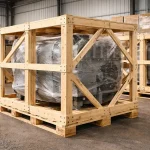
Machinery may require export wooden packaging, moisture protection, lifting equipment or special handling. Ask whether these services are included and whether the packaging is appropriate for the expected transportation conditions.
Inland Transportation in China
A supplier’s factory price may not include transportation to the port, terminal handling or other logistics services. Clarify which party arranges and pays for each service.
Export Documentation
Confirm who prepares the commercial invoice, packing list and other documents required for the shipment. Determine who is responsible for export customs clearance under the chosen rule.
Freight and Destination Charges
A CIF quotation may cover freight to the named destination port but exclude destination terminal charges, customs brokerage, unloading and final delivery.
Ask your freight forwarder for a destination-cost estimate before confirming the order.
Cargo Insurance
Check the insured amount, covered risks, exclusions, claims procedure and whether additional coverage is advisable for the machinery.
Under CIF, the seller must obtain the insurance cover required by the rule, which is generally minimum cover unless the parties agree otherwise. Buyers who need broader protection should discuss additional insurance.
Import Duties and Taxes
Import duties, VAT or other taxes depend on the destination country, product classification, customs valuation and applicable regulations. Confirm these with a qualified customs broker or the relevant customs authority.
6. Special Considerations for Used Machinery
Buying used woodworking machinery or second-hand ceramic equipment can involve additional risks beyond transportation costs.
Before agreeing on EXW, FOB or CIF, establish who is responsible for inspecting, dismantling, disconnecting, packing and loading the equipment.
You should also confirm:
- Whether the machine has been tested before shipment.
- Whether accessories, spare parts and control systems are included.
- Whether the machinery needs dismantling or special lifting arrangements.
- Whether packaging protects exposed surfaces and electrical components.
- Whether the machine’s weight and dimensions have been verified.
- Whether the destination country imposes special requirements on used equipment.
For used machinery, a pre-shipment inspection and a clearly documented packing list can help reduce misunderstandings.
Do not assume that a freight quotation includes dismantling, inspection, repairs or loading unless these services are explicitly stated.
7. How to Request a Clear Machinery Quotation from China
When requesting a quotation, provide enough information for the supplier and freight forwarder to estimate the actual shipping requirements.
A useful RFQ should include:
- Machine details:Product name, model and intended application.
- Quantity:Number of machines and any additional equipment.
- Shipment information:Estimated gross weight, dimensions and packaging requirements, if available.
- Destination:Country and preferred destination port or delivery address.
- Trade term:EXW, FCA, FOB or CIF, with the named place or port.
- Shipping preferences:Whether you have your own freight forwarder.
- Additional services:Inspection, installation, training, spare parts or special packaging, if required.
If the final dimensions and weight are not yet available, ask the supplier to confirm them before booking freight.
You can also request two comparable quotations, such as FOB and CIF, to help evaluate the difference between supplier-arranged and buyer-arranged shipping.
8. Common Mistakes to Avoid
Mistake 1: Assuming CIF means delivery to your factory.
CIF generally covers carriage and required insurance to the named destination port, not complete delivery to your premises.
Mistake 2: Assuming the seller bears risk until a CIF shipment arrives.
Under CIF, risk generally transfers when the goods are loaded on board the vessel at the port of shipment.
Mistake 3: Using FOB without identifying the port.
The named port matters. Always specify the agreed port of shipment in the sales contract.
Mistake 4: Ignoring container-shipping requirements.
FOB is designed for sea and inland waterway transport. For containerized machinery handed to a carrier at a terminal, FCA may better reflect the actual delivery arrangement.
Mistake 5: Comparing quotations with different inclusions.
One supplier may include packaging and inland transport, while another may exclude them. Compare the scope of each quotation before making a decision.
Mistake 6: Treating an Incoterm as a complete purchase contract.
Incoterms do not determine every aspect of a transaction, such as payment terms, product specifications, ownership transfer, remedies for defects or the consequences of late delivery. These matters should be addressed separately in the sales contract.
9. Frequently Asked Questions
Is EXW cheaper than FOB?
Not necessarily. EXW may show a lower initial price, but the buyer generally needs to arrange more of the transportation and export-related process. Compare the total cost of the shipment rather than the initial quotation.
Is CIF safer than FOB?
Neither term automatically makes the machinery safer. Under CIF, the seller arranges the required insurance, but risk generally transfers at the port of shipment. Review the insurance policy, exclusions, packaging and claims arrangements before choosing.
Does CIF include import duty and VAT?
Generally, no. CIF covers the agreed carriage and required insurance to the named destination port. Import clearance, duties, taxes and onward transportation are generally the buyer’s responsibility.
Can I use CIF for woodworking machinery?
Yes. CIF can be used for machinery transported by sea or inland waterway. Specify the destination port and confirm which freight and insurance costs are included.
Should I choose FOB or FCA for containerized machinery?
FCA is often more appropriate when the seller hands containerized goods to a carrier at a terminal before the container is loaded onto the vessel. The appropriate rule depends on the actual delivery arrangement and should be agreed with your supplier and freight forwarder.
Which Incoterm is best for a first-time machinery importer?
There is no universal answer. CIF may simplify the arrangement of main sea freight, while FCA or FOB may be suitable when a buyer has a reliable logistics provider. In every case, obtain a clear breakdown of included and excluded costs.
Conclusion: Compare Total Import Costs, Not Just the Machinery Price
EXW, FOB and CIF allocate different responsibilities for delivery, transportation costs, export procedures and insurance. Choosing the right arrangement requires understanding your own logistics capabilities and the actual services included in the supplier’s quotation.
For buyers sourcing woodworking machinery, ceramic manufacturing equipment and industrial tools from China, the best approach is to define the delivery point, compare equivalent quotations, confirm the insurance and customs arrangements, and estimate destination costs before placing an order.
Machrix Industrial helps overseas buyers explore machinery and industrial tool sourcing opportunities in China. When evaluating a machine, make sure your quotation covers the product requirements as well as the logistics arrangements needed for your destination.
Planning to source machinery from China?
Contact Machrix Industrial to discuss your machinery requirements and prepare a clearer sourcing and quotation checklist.