Foshan Machinery Manufacturing and Sourcing Guide: How to Find Reliable Suppliers in China
Foshan, Guangdong, is one of China’s important manufacturing centers, with established industries covering furniture, ceramics, metal products, building materials and related industrial equipment. For international buyers, the region can be a useful starting point for sourcing machinery, comparing suppliers and exploring manufacturing solutions.
However, finding a suitable supplier involves more than identifying a factory with an attractive price. Buyers need to assess equipment specifications, manufacturing capabilities, quality control, after-sales support and export arrangements before making a purchasing decision.
In this guide, Machrix Industrial explains how to source machinery from Foshan, what equipment categories to explore, how to evaluate suppliers, and how to reduce common purchasing risks when importing machinery from China.
1. Why Source Machinery from Foshan, China?
Foshan is widely associated with furniture, ceramics, building materials and related manufacturing activities. Its industrial ecosystem makes the city and surrounding manufacturing areas worth considering when sourcing equipment for production facilities.
A Manufacturing Ecosystem for Furniture and Building Materials
Foshan and the surrounding Pearl River Delta have developed manufacturing networks serving furniture, home furnishing, ceramics, metalworking and other industrial sectors.
For machinery buyers, this means there may be opportunities to explore equipment suppliers, component manufacturers and supporting service providers within the wider region.
The specific supplier landscape varies by product category, so buyers should evaluate each factory individually rather than assuming every type of machine is manufactured locally.
Access to Different Machinery and Tool Categories
Depending on the application, buyers may investigate:
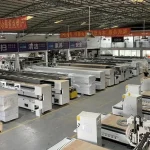
- Woodworking and panel furniture machinery.
- CNC routers, edge banding machines and drilling equipment.
- Ceramic processing and tile cutting machinery.
- Metalworking equipment and industrial tools.
- New machinery for production expansion.
- Used machinery for budget-conscious projects.
Not every category has the same manufacturing concentration or supplier availability. Some products may need to be sourced from other manufacturing centers in China.
Opportunities for New and Used Equipment
New machinery may offer current specifications, manufacturer support and more predictable equipment condition.
Used machinery can provide an alternative for buyers who need to manage capital expenditure, expand capacity gradually or obtain equipment for specific production tasks.
However, used equipment requires careful verification of operating condition, service history, remaining useful life, spare parts availability and compatibility with the buyer’s production requirements.
2. What Types of Machinery Can You Source?
The best sourcing strategy starts with your production requirements, rather than selecting a machine based only on its advertised price.
Woodworking and Furniture Manufacturing Machinery
Furniture manufacturers may need equipment for cutting, drilling, milling, edge banding, panel processing or CNC machining.
When comparing suppliers, check the following:
- Maximum workpiece dimensions and processing thickness.
- Production capacity and expected cycle time.
- Required precision and repeatability.
- Compatibility with your materials and production workflow.
- Electrical specifications and control system.
- Installation, training and technical support.
For panel furniture production, consider how each machine integrates with the complete manufacturing process instead of evaluating individual machines in isolation.
Ceramic Manufacturing and Processing Equipment
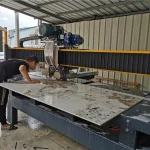
Ceramic factories and tile-processing businesses may require cutting, grinding, polishing, handling or other processing equipment.
Before requesting quotations, identify the material type, tile dimensions, thickness range, required finish and expected production volume.
Ask suppliers to confirm that the proposed machine is suitable for your actual material and processing conditions.
Industrial Tools and Specialized Equipment
Some buyers need industrial tools or specialized machines for installation, fabrication, maintenance or repetitive production tasks.
For these products, assess working capacity, compatible materials, consumables, tooling availability, maintenance requirements and replacement-part support.
A detailed application description often helps suppliers recommend a more appropriate solution.
3. How to Find Machinery Suppliers in Foshan
There are several ways to identify potential suppliers. Using more than one sourcing channel can help you compare options and avoid relying on a single quotation.
Search Online and Review Supplier Websites
Start with product-specific search terms rather than broad phrases such as “machinery factory China.”
For example:
- Woodworking machinery manufacturer in Foshan.
- CNC router supplier in Guangdong.
- Ceramic tile cutting machine manufacturer in China.
- Used woodworking machinery supplier China.
- Industrial tool manufacturer China.
Review product catalogs, technical specifications, factory information, company contact details and available documentation.
A professional website is useful, but it does not independently prove that a supplier owns a factory, manufactures every listed product or has reliable export experience.
Attend Trade Fairs and Visit Factories
Trade fairs can help buyers compare equipment, discuss technical requirements and meet suppliers directly.
Factory visits can provide further insight into manufacturing processes, assembly facilities, quality control and production management.
Before arranging a visit, confirm the company’s legal name, factory address, product scope and whether the location is a manufacturing facility, showroom, warehouse or trading office.
Use a Structured Sourcing Process
For buyers who do not have an established sourcing team in China, a structured process can help organize supplier research, quotation comparison, inspection and shipment preparation.
A sourcing partner may assist with communication and coordination, but buyers should still define their requirements, verify relevant information and approve important purchasing decisions.
4. How to Verify a Machinery Supplier in China
Supplier verification is an essential step before placing an order, particularly for expensive machinery or second-hand equipment.
Verify Company Identity and Business Information
Request the supplier’s registered company name, business registration details, operating address and official contact information.
Where appropriate, verify the company through relevant Chinese business registration resources or qualified local service providers.
Confirm that the legal entity named in the quotation, sales contract and payment instructions is consistent with the entity you intend to purchase from.
If the supplier uses a different exporting company, ask for an explanation of the relationship and the contractual responsibilities of each party.
Confirm Manufacturing Capabilities
Ask whether the supplier manufactures the machine, assembles components, distributes equipment from other manufacturers or operates as a trading company.
Request evidence appropriate to the transaction, such as:
- Factory photographs or a live video walkthrough.
- Product model lists and technical specifications.
- Relevant quality management documentation.
- Production or assembly process information.
- References or verifiable examples of comparable projects, where available.
A trading company is not automatically unsuitable. The important consideration is whether it can provide the product, documentation, communication and support required for your purchase.
Evaluate Quality Control and After-Sales Support
Before committing to an order, establish how the supplier manages product testing, packaging, spare parts and technical support.
Ask for the acceptance criteria that will apply before shipment. For complex equipment, this may include a factory acceptance test or another agreed inspection procedure.
Confirm the warranty period, exclusions, response process and responsibility for replacement parts or service costs in writing.
5. New vs. Used Machinery: Which Should You Choose?
The choice between new and used machinery depends on your budget, production requirements, equipment condition and long-term operating plans.
When New Machinery May Be the Better Option
New machinery may be preferable when you need specific technical configurations, predictable equipment condition, manufacturer support or integration into a new production line.
It can also be easier to specify acceptance requirements before production and shipment.
However, buyers should still verify the actual specifications, performance claims, warranty terms and delivery schedule.
When Used Machinery May Be Worth Considering
Used machinery may be suitable when the budget is limited, the required model is no longer readily available new, or the buyer needs additional capacity for a defined production task.
The purchase price alone should not determine the decision. Repair costs, dismantling, refurbishment, replacement parts, installation and transportation may significantly affect the final investment.
A Used Machinery Inspection Checklist
Before purchasing used equipment, ask for:
- The machine’s model, serial number and manufacturing year, if available.
- Operating hours and maintenance records, where available.
- Current photographs and videos showing the machine in operation.
- Details of wear, repairs, modifications or known defects.
- Confirmation of included accessories, tooling and spare parts.
- An agreed inspection and acceptance procedure.
- Verified dimensions, gross weight and dismantling requirements.
- Confirmation of import eligibility and any applicable destination-country requirements.
Where the purchase value justifies it, arrange an independent inspection before shipment.
6. How to Compare Machinery Quotations
A low initial price does not necessarily represent the lowest total cost.
Ask each supplier to quote against the same requirements and clarify exactly what is included.
Compare Technical Specifications First
Confirm that the quotations cover equivalent machine models, capacities, configurations, accessories, electrical standards and performance requirements.
If the machines differ technically, compare their suitability for the intended application before comparing prices.
Compare the Complete Purchasing Cost
Your total purchasing cost may include:
- Machinery price.
- Optional tooling and accessories.
- Export packaging and loading.
- Inland transportation in China.
- Export documentation and customs procedures.
- International freight and insurance.
- Destination handling and customs brokerage.
- Import duties and taxes.
- Installation, training and commissioning.
- Spare parts and ongoing maintenance.
Not every cost applies to every transaction. Ask for a written breakdown and identify any exclusions.
Confirm the Delivery and Shipping Terms
Clarify the agreed Incoterms® rule and the named place or port. Common arrangements include EXW, FCA, FOB and CIF, depending on the shipment and the actual delivery process.
Do not assume that a quotation includes door-to-door delivery, customs duties or every destination charge.
For more details, read our guide to EXW vs FOB vs CIF for machinery buyers.
7. Shipping Machinery from Foshan to Your Country
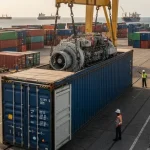
International machinery shipping requires coordination between the supplier, buyer, freight forwarder and, where applicable, customs broker.
Confirm Dimensions, Weight and Packaging
Obtain the machine’s packing dimensions, gross weight, package count and handling requirements before requesting a final freight quotation.
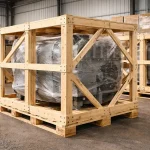
Large or heavy equipment may require special loading arrangements, lifting equipment or customized packaging.
For used machinery, confirm who is responsible for dismantling, disconnecting utilities, protecting exposed components and preparing the equipment for transportation.
Prepare Export and Import Documentation
Depending on the transaction and destination, documents may include a commercial invoice, packing list, transport document and other required certificates or declarations.
The exact requirements depend on the product, shipping arrangement and destination-country regulations.
Confirm documentation responsibilities with the supplier and qualified logistics or customs professionals before shipment.
Check Import Requirements Before Ordering
Some countries impose special requirements on used machinery, electrical equipment, industrial products or equipment containing regulated components.
Verify product classification, applicable duties, technical standards, import permits and any restrictions with the relevant customs authority or qualified broker.
Do not assume that a machine can be imported solely because a supplier is willing to export it.
8. Common Mistakes to Avoid When Sourcing Machinery
Choosing a Supplier Based Only on Price
An unusually low quotation may exclude essential accessories, packaging, installation or technical support.
Compare equivalent specifications and total purchasing costs before making a decision.
Skipping Inspection
Product photographs and online conversations cannot always establish the actual condition or performance of a machine.
For significant purchases, agree on measurable acceptance criteria and consider an independent pre-shipment inspection.
Ignoring Spare Parts and Maintenance
A machine that cannot be maintained locally may create expensive downtime.
Before ordering, identify critical spare parts, maintenance procedures, consumables and available technical support.
Leaving Important Agreements Verbal
Record the machine model, configuration, delivery schedule, payment milestones, inspection requirements, warranty terms and responsibility for defects in the written contract.
Clear documentation helps reduce misunderstandings between overseas buyers and Chinese suppliers.
9. A Step-by-Step Machinery Sourcing Process
A practical sourcing process can be organized into five stages.
Step 1 — Define Your Requirements
Document the application, capacity, technical specifications, quantity, budget and destination country.
Step 2 — Identify Potential Suppliers
Research suppliers whose products and capabilities match the defined requirements. Shortlist candidates for further verification.
Step 3 — Verify and Compare
Check company information, technical suitability, quotation inclusions, support capabilities and relevant documentation.
Step 4 — Inspect and Confirm the Order
Agree on specifications, acceptance criteria, payment arrangements and inspection requirements before finalizing the purchase.
Step 5 — Arrange Shipping and Delivery
Confirm packaging, shipment dimensions, shipping terms, export documentation, freight arrangements and destination import requirements.
The sequence may vary depending on the machinery, supplier and purchasing contract, but documenting each stage makes the process easier to manage.
10. How Machrix Industrial Can Support Your Machinery Sourcing
Machrix Industrial is a China-based machinery and industrial tools sourcing business focused on helping overseas buyers explore equipment and supplier options.
Our sourcing focus includes machinery and tools for furniture manufacturing, woodworking applications and related industrial uses, with opportunities to explore additional equipment categories as requirements arise.
Machinery Research and Product Selection
Share your application, technical requirements and budget to help narrow down suitable machinery options.
New and Used Equipment Sourcing
Depending on product availability, buyers can explore new and used machinery options and compare their specifications, condition and purchasing considerations.
Supplier Communication and Quotation Comparison
Clear technical requirements and comparable quotations help buyers evaluate different offers more effectively.
The scope of any sourcing, inspection or logistics assistance should be confirmed before engagement. Product availability, inspection arrangements and delivery services depend on the specific supplier and transaction.
12. Frequently Asked Questions
Is Foshan a good place to source machinery from China?
Foshan is worth considering for machinery associated with furniture, ceramics, building materials and related industries. However, supplier suitability and availability vary by product, so buyers should verify each company’s capabilities.
Can I buy used woodworking machinery from China?
Yes, used woodworking machinery is available through various channels in China. Buyers should verify the machine’s condition, operating history, technical specifications, spare parts availability and destination-country import requirements.
How can I verify whether a Chinese machinery supplier is reliable?
Start by checking its legal identity, business address, product specifications and manufacturing or distribution capabilities. Request relevant documentation, establish written acceptance criteria and consider an independent inspection before shipment.
What information should I provide when requesting a machinery quotation?
Provide the machine type, intended application, capacity, required specifications, quantity, new or used preference, destination country and any known shipping requirements. This helps suppliers prepare more comparable quotations.
Should I visit the factory before purchasing machinery?
A factory visit can be useful for high-value or technically complex purchases. If a visit is not practical, consider a live video inspection, independent factory audit or pre-shipment inspection appropriate to the transaction.
Does Machrix Industrial manufacture all the machinery listed on its website?
Machrix Industrial operates as a trading and sourcing business rather than claiming to manufacture every listed product. Buyers should confirm the actual manufacturer, product availability, specifications and contractual seller for each quotation.
Conclusion — Build a Better Machinery Sourcing Strategy in China
Foshan offers overseas buyers access to a broad manufacturing ecosystem, particularly in furniture, ceramics, building materials and related industrial sectors. The right sourcing opportunity depends on your application, technical requirements, budget and supplier verification process.
By comparing equivalent quotations, checking equipment condition, agreeing on acceptance criteria and confirming shipping requirements before ordering, buyers can make more informed machinery purchasing decisions.
Machrix Industrial helps overseas buyers explore machinery and industrial tool sourcing opportunities in China.
Looking for machinery for your factory or production business?
Contact Machrix Industrial to discuss your requirements and request a machinery quotation.
Request a Machinery Quote
This guide provides general sourcing information and does not constitute legal, customs, engineering or freight-forwarding advice. Verify supplier claims, equipment suitability and import requirements before placing an order.