How to Import Machinery from China: A Step-by-Step Guide
A practical international buyer’s guide to sourcing machinery from China, supplier verification, purchase contracts, Incoterms, shipping, customs clearance, import compliance, and installation.
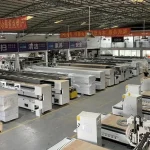
China is a major manufacturing base for industrial machinery, offering equipment for furniture production, ceramic processing, metalworking, packaging, automation, and many other industries.
For international buyers, importing machinery from China can provide access to a wide range of manufacturers, equipment configurations, and new or used machinery options.
However, purchasing industrial equipment internationally involves more than comparing machine prices.
Buyers must consider technical specifications, supplier reliability, payment terms, export documentation, international transportation, customs classification, import duties, local safety requirements, and installation arrangements.
A mistake at any stage can lead to delays, unexpected costs, damaged equipment, or machinery that cannot legally or practically be operated at the destination.
Successful machinery importing requires coordinated technical, commercial, logistics, and compliance planning before the equipment leaves China.
This guide explains the machinery importing process step by step, helping international buyers understand what to prepare, what to verify, and how to reduce common risks.
1. Why Import Industrial Machinery from China?
China has a broad machinery manufacturing ecosystem serving many industrial sectors.
1.1 Access to Different Machinery Categories
International buyers can research Chinese suppliers for equipment such as:
- CNC woodworking routers
- Edge banding machines
- Panel saws
- Furniture production equipment
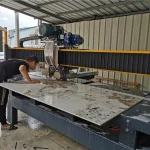
- Ceramic tile cutting machines
- Ceramic polishing equipment
- Industrial presses
- Packaging machinery
- Material handling systems
- Industrial tools
The availability of particular specifications depends on the manufacturer and product category.
1.2 Different Equipment Configurations
Suppliers may offer standalone machines, automated equipment, or production-line systems.
Buyers should compare machinery based on their actual manufacturing requirements rather than relying on catalog descriptions alone.
1.3 New and Used Machinery Options
New equipment may offer customization and manufacturer support.
Used equipment may reduce initial investment but requires careful technical evaluation, particularly when it must be dismantled and relocated internationally.
1.4 Opportunities for Supplier Comparison
Buyers can compare different manufacturers and trading companies according to technical capability, equipment quality, commercial terms, and after-sales support.
2. Step One: Define Your Machinery Import Requirements
Before contacting suppliers, prepare a clear equipment requirement document.
2.1 Identify the Machinery Type
Specify the exact equipment category and intended application.
For example, a furniture manufacturer may need a CNC router for panel nesting, while a ceramic processor may require an automatic tile cutting line.
2.2 Define Technical Specifications
Depending on the equipment, provide:
- Material type
- Workpiece dimensions
- Processing thickness
- Production capacity
- Required accuracy
- Automation level
- Electrical supply
- Available factory space
- Software requirements
- Safety requirements
2.3 Confirm New or Used Preference
Used equipment requires additional assessment of machine condition, maintenance history, dismantling, and spare-parts availability.
2.4 Establish a Realistic Budget
The budget should include more than the purchase price.
Allow for freight, import duties, taxes, installation, training, and possible modifications.
2.5 Identify Destination Requirements
Confirm the destination country, installation site, and relevant machinery import regulations before placing an order.
3. Step Two: Find and Evaluate Machinery Suppliers in China
Finding a supplier is only the beginning of the procurement process.
3.1 Understand Supplier Types
Machinery suppliers may include:
- Original equipment manufacturers
- Authorized distributors
- Trading companies
- Used machinery dealers
- Production-line integrators
Each may have different responsibilities for manufacturing, technical support, and warranty.
3.2 Verify Company Information
Check the supplier’s registered company name, business identity, operating location, and contractual entity.
3.3 Evaluate Technical Capability
Request product specifications, engineering drawings, equipment documentation, relevant references, and testing arrangements.
3.4 Compare Quotations
Provide the same requirements to multiple suitable suppliers.
Compare the complete equipment configuration, not just the headline price.
3.5 Confirm After-Sales Support
Clarify warranty terms, spare-parts availability, installation support, training, and remote troubleshooting.
4. Step Three: Confirm Machinery Specifications and Compliance
A machine that operates successfully in China may still require assessment before installation in another country.
4.1 Verify Electrical Compatibility
Confirm:
- Voltage
- Frequency
- Phase configuration
- Connected load
- Earthing requirements
- Control voltage
4.2 Review Safety Requirements
Machinery safety obligations vary by destination.
Buyers should identify applicable requirements for guards, emergency stops, interlocks, electrical safety, and technical documentation.
4.3 Check Destination-Country Compliance
Depending on the country and machinery type, conformity assessment, documentation, labeling, or other regulatory obligations may apply.
For example, machinery placed on the European Union market may be subject to applicable EU machinery legislation and related requirements.
Buyers should verify the rules applicable at the time of import and placing on the market.
4.4 Check Environmental Requirements
Some machinery may require dust extraction, wastewater treatment, emissions controls, or other environmental systems.
4.5 Do Not Assume Certifications Are Automatically Valid
Request the actual technical documentation and assess whether it meets the destination’s requirements.
A supplier’s general statement that equipment is “CE certified” or “export ready” should not replace verification.
5. Step Four: Negotiate the Machinery Purchase Contract
A written contract should clearly describe the equipment and the responsibilities of both parties.
5.1 Define Equipment Specifications
Include:
- Manufacturer and model
- Machine configuration
- Technical parameters
- Accessories
- Software
- Tooling
- Documentation
Required performance
5.2 Define Price and Currency
Confirm the total contract price, currency, and what is included.
5.3 Define Payment Terms
Payment arrangements vary by supplier and project.
For higher-value machinery, payment milestones may be linked to manufacturing progress, inspection, shipment, or acceptance, subject to negotiation.
5.4 Define Delivery Terms
Specify the selected Incoterms rule and named location or port.
For example, simply writing “FOB China” is not sufficiently precise.
5.5 Define Inspection and Acceptance Criteria
Agree on the tests, measurements, documentation, and conditions required for acceptance.
5.6 Define Warranty and Support
Specify warranty scope, exclusions, spare parts, service responsibilities, and response arrangements.
5.7 Define Remedies for Nonconformity
The contract should address what happens if equipment does not meet the agreed specifications or delivery obligations.
6. Step Five: Understand Incoterms for Machinery Imports
Incoterms rules define important responsibilities for delivery, costs, and transfer of risk between seller and buyer.
They do not, by themselves, determine ownership transfer, payment terms, or every contractual obligation.
6.1 EXW — Ex Works
Under EXW, the seller makes the goods available at the named place.
The buyer generally takes on substantial responsibility for collection, export arrangements, and onward transportation.
EXW can be difficult for international buyers who cannot manage export formalities in China.
6.2 FCA — Free Carrier
Under FCA, the seller delivers the goods to the carrier or another nominated party at the agreed place.
FCA can be useful for containerized machinery shipments and offers a clearer allocation of export responsibilities than EXW in many cases.
6.3 FOB — Free on Board
FOB is intended for sea and inland waterway transport.
The seller delivers the goods on board the vessel at the named port of shipment.
FOB may be appropriate for certain maritime machinery shipments, but FCA is often worth considering for containerized cargo handed to a carrier before vessel loading.
6.4 CIF — Cost, Insurance and Freight
Under CIF, the seller contracts and pays for carriage and insurance to the named destination port.
However, risk transfers when the goods are on board the vessel at the port of shipment, not when they arrive at the destination.
The insurance required under CIF may provide only the minimum cover specified by the rule unless broader cover is agreed.
6.5 DAP — Delivered at Place
Under DAP, the seller delivers the goods to the named destination, ready for unloading.
The buyer generally handles import clearance and duties or taxes unless otherwise agreed.
6.6 Incoterms Comparison
Term | Transport Mode | Export Clearance | Main Carriage | Import Clearance |
EXW | Any | Generally buyer | Buyer | Buyer |
FCA | Any | Seller | Generally buyer | Buyer |
FOB | Sea / inland waterway | Seller | Buyer | Buyer |
CIF | Sea / inland waterway | Seller | Seller | Buyer |
DAP | Any | Seller | Seller | Buyer |
This is a simplified comparison of Incoterms® 2020. Each transaction should specify the exact rule and named place or port.
7. Step Six: Arrange Machinery Inspection Before Shipping
Pre-shipment inspection helps confirm whether the equipment matches the contract.
7.1 New Machinery Inspection
Depending on the project, inspection may include:
- Equipment identity
- Machine configuration
- Mechanical condition
- Electrical systems
- Safety functions
- Functional testing
- Production accuracy
- Documentation
7.2 Used Machinery Inspection
Used machinery should receive additional checks for wear, corrosion, maintenance history, obsolete controls, missing accessories, and actual operating performance.
7.3 Factory Acceptance Testing
A factory acceptance test, or FAT, evaluates equipment against agreed criteria before shipment.
The test scope should be defined in the purchase contract.
7.4 Inspection Report
A useful report includes photographs, measurements, test results, defects, corrective actions, and acceptance status.
7.5 Inspect Before Dismantling
For used machinery, inspection and functional testing should ideally take place before dismantling.
8. Step Seven: Plan Machinery Packing and International Shipping
Industrial machinery requires transportation planning based on its dimensions, weight, sensitivity, and handling requirements.
8.1 Confirm Packing Dimensions and Weight
Request accurate measurements for each shipping package.
8.2 Choose Suitable Packing
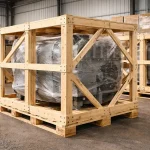
Packing may involve:
- Protective wrapping
- Moisture protection
- Wooden cases or crates
- Skids
- Blocking and bracing
- Corrosion protection
- Protection of precision components
Wood packaging may be subject to destination phytosanitary requirements, such as ISPM 15 where applicable.
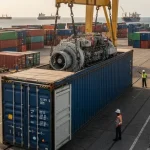
8.3 Select the Shipping Method
Common methods include:
Container shipping: Suitable for equipment that fits within container dimensions and weight limits.
Flat rack or open-top container: May be used for certain oversized machinery.
Breakbulk or project cargo: May be necessary for particularly large or heavy equipment.
Air freight: May be practical for small, high-value components or urgent spare parts.
8.4 Confirm Lifting and Loading Requirements
Identify lifting points, center of gravity, handling restrictions, and any special equipment needed.
8.5 Arrange Cargo Insurance
Insurance coverage should reflect the machinery value, transport risks, and contractual responsibilities.
8.6 Document Equipment Condition Before Dispatch
Take photographs of the machinery and packing before loading.
9. Step Eight: Prepare Export and Import Documents
Documentation requirements vary by country, equipment type, and shipment.
9.1 Commercial Invoice
The invoice generally identifies the seller, buyer, goods, quantities, prices, and transaction details.
9.2 Packing List
The packing list should describe packages, dimensions, weights, and contents.
9.3 Bill of Lading or Air Waybill
Transport documents provide information about the shipment and carriage arrangements.
9.4 Certificate of Origin
A certificate of origin may be required for certain transactions or preferential tariff claims.
9.5 Technical Documentation
Machinery manuals, specifications, conformity documentation, and other technical records may be required.
9.6 Inspection Documents
Inspection reports or testing records may be useful or required under the contract.
9.7 Insurance Documents
Insurance certificates or policies may be required depending on the shipping arrangements.
10. Step Nine: Understand Customs Clearance and Import Duties
Importing machinery requires correct customs classification and compliance with destination-country rules.
10.1 Determine the Correct HS Classification
Machinery is classified under the Harmonized System and the destination country’s tariff schedule.
Classification depends on the machine’s function and technical characteristics.
Buyers should not assume that all industrial machinery uses the same tariff code.
10.2 Confirm Import Duties
Duty rates depend on factors such as classification, origin, destination country, and applicable trade measures.
10.3 Consider Import Taxes
Depending on the country, VAT, GST, or other taxes may apply.
10.4 Check Additional Trade Measures
Some products may be subject to additional duties, restrictions, or other trade measures.
These must be checked for the specific product and destination.
10.5 Work with a Qualified Customs Broker
A customs broker can help determine documentation, classification, and customs clearance requirements.
10.6 Used Machinery Import Restrictions
Some countries impose special conditions on used equipment.
Before purchasing, confirm whether the machinery can legally be imported and whether inspection, age, environmental, or safety requirements apply.
11. Step Ten: Arrange Installation and Commissioning
International machinery purchasing does not end when the equipment arrives.
11.1 Prepare the Installation Site
Confirm:
- Floor space
- Foundation requirements
- Floor loading
- Electrical supply
- Compressed air
- Water supply
- Ventilation
- Dust extraction
- Wastewater handling
11.2 Arrange Unloading and Positioning
Use suitable lifting equipment and qualified personnel.
11.3 Complete Mechanical and Electrical Installation
Installation should follow the applicable technical documentation and safety requirements.
11.4 Perform Commissioning Tests
Confirm machine operation, accuracy, production quality, and relevant safety functions.
11.5 Train Operators and Maintenance Personnel
Training may cover machine operation, routine maintenance, safety procedures, and troubleshooting.
11.6 Complete Final Acceptance
Final acceptance should be based on the contractual criteria and documented results.
12. How Much Does It Cost to Import Machinery from China?
The total cost depends on the equipment, transport arrangements, destination, and project scope.
12.1 Equipment Price
The base machinery cost depends on specifications, manufacturer, configuration, and condition.
12.2 Inland Transportation in China
Equipment may need to be transported from the factory to a port or logistics facility.
12.3 Export Packing
Heavy machinery may require special packaging and handling.
12.4 International Freight
Freight depends on cargo size, weight, route, transport method, and market conditions.
12.5 Insurance
Insurance cost depends on coverage and insured value.
12.6 Customs Duties and Taxes
These vary by destination and classification.
12.7 Installation and Commissioning
Engineering, labor, travel, and site preparation may create additional costs.
12.8 Total Import Cost Formula
Total Import Project Cost = Equipment Price + Inland Logistics + Export Packing + International Freight + Insurance + Import Duties and Taxes + Local Delivery + Installation + Commissioning + Contingency
Avoid double-counting costs already included under the selected Incoterms rule.
13. Common Mistakes When Importing Machinery from China
13.1 Choosing Suppliers Only by Price
Compare complete equipment specifications and commercial responsibilities.
13.2 Ignoring Destination Compliance
A machine may require modifications or documentation before legal installation.
13.3 Using Unclear Incoterms
Always specify the Incoterms rule, named place or port, and version.
13.4 Underestimating Shipping Costs
Large or heavy machinery may require specialized transportation.
13.5 Skipping Pre-Shipment Inspection
Inspection can identify problems before the machinery leaves China.
13.6 Overlooking Spare Parts
Confirm availability of critical parts and consumables.
13.7 Ignoring Installation Requirements
Site preparation, utilities, and commissioning should be planned before shipment.
13.8 Failing to Verify Used Machinery Import Rules
Used equipment may be subject to additional requirements or restrictions.
14. Frequently Asked Questions
Can I import industrial machinery directly from China?
Yes, in many cases. However, importers must comply with destination-country customs, safety, documentation, and other applicable requirements.
What is the best Incoterm for importing machinery?
There is no universal best option. FCA, FOB, CIF, DAP, and other terms may be suitable depending on the shipment, transport mode, and buyer’s logistics capability.
How much does shipping machinery from China cost?
Costs vary by machine size, weight, shipping route, transport method, and market conditions. Request quotations based on accurate packed dimensions and weights.
Do I need an import license for machinery?
Requirements depend on the destination country and equipment type. Some machinery can be imported under normal customs procedures, while other products may require permits or additional documentation.
Can I import used machinery from China?
Used machinery can be imported into some markets, subject to local rules. Check eligibility and compliance before purchase.
What documents are needed to import machinery?
Common documents include a commercial invoice, packing list, transport document, and applicable technical or conformity documentation. Additional documents may be required.
Should I inspect machinery before shipping?
Pre-shipment inspection is strongly recommended for high-value, customized, or used equipment, particularly where performance or condition is difficult to verify remotely.
How long does machinery importing take?
The timeline depends on equipment availability, manufacturing, testing, shipping, customs clearance, and installation. Buyers should request a project-specific schedule.
Can Chinese machinery operate on my country's electrical supply?
Some machines can be configured for different electrical standards, but compatibility must be confirmed before purchase.
Who is responsible for installing imported machinery?
Installation responsibilities depend on the purchase contract. Buyers should clarify whether the supplier provides installation, supervision, commissioning, and training.
15. Import Machinery from China with Machrix
Importing machinery requires coordination between equipment selection, supplier evaluation, technical specifications, shipping, customs requirements, and installation planning.
Machrix Industrial is a Foshan-based machinery sourcing business focused on connecting international buyers with Chinese machinery and industrial tool suppliers.
Our initial focus includes new and used furniture manufacturing machinery, ceramic industry equipment, and industrial tools.
Whether you are looking for a standalone machine or exploring equipment for a larger production project, clear technical requirements are the starting point for identifying suitable supplier options.
Tell Us About Your Machinery Import Project
Please provide:
- Machinery type
- Intended application
- Technical specifications
- Production capacity
- New or used preference
- Budget range
- Destination country
- Preferred shipping terms
- Inspection requirements
- Installation and support needs
Submit Your Machinery RFQ
Website: https://machrix.com/
Email: sales@machrix.com
Machinery availability, supplier selection, logistics arrangements, inspection services, and commercial terms are subject to confirmation for each project.