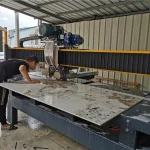
Used Ceramic Machinery: Inspection Checklist Before Buying
A practical inspection guide for international buyers of second-hand ceramic tile cutting machines, polishing equipment, glazing lines, hydraulic presses, kilns, and other used ceramic manufacturing machinery.
Buying used ceramic machinery can be a practical way to expand production capacity, replace aging equipment, or establish a manufacturing operation with a lower initial equipment budget.
China has an established ceramic manufacturing industry, and used equipment may become available through factory upgrades, production changes, equipment replacement, and business restructuring.
However, purchasing second-hand ceramic machinery involves risks that are different from buying new equipment.
A machine may appear complete and operational while containing worn mechanical components, aging electrical systems, outdated controllers, missing accessories, or maintenance problems.
For large ceramic production equipment, dismantling, transportation, reinstallation, and commissioning can also create significant costs.
These risks become more important when machinery is purchased internationally and the buyer cannot easily inspect or repair it after delivery.
The most important principle when buying used ceramic machinery is to verify its identity, actual condition, operating performance, completeness, and relocation requirements before committing to shipment.
This guide provides a practical inspection checklist for evaluating used ceramic equipment from China, including mechanical, electrical, hydraulic, control, safety, and production performance checks.
1. Why Inspect Used Ceramic Machinery Before Buying?
Used machinery can offer financial advantages, but its actual value depends on condition, functionality, and suitability for the intended production process.
1.1 Lower Purchase Price Does Not Always Mean Lower Total Cost
The initial equipment price may be lower than that of a comparable new machine.
However, additional expenses can include:
- Replacement of worn components
- Electrical repairs
- Controller upgrades
- Missing accessories
- Dismantling
- Export packing
- International freight
- Installation
- Commissioning
- Production downtime
Buyers should evaluate the total cost of putting the equipment into reliable operation.
1.2 Machinery Condition Varies Significantly
Two machines of the same model and manufacturing year can have very different conditions.
Differences may result from:
- Operating hours
- Production environment
- Maintenance quality
- Water and chemical exposure
- Previous repairs
- Loading conditions
- Operator practices
- Storage conditions
Machine age alone is not a reliable measure of remaining service life.
1.3 Some Defects Are Difficult to Identify from Photographs
Supplier photographs may show the external appearance of a machine without revealing internal wear or control problems.
A comprehensive inspection should therefore include documentation review, physical examination, and functional testing whenever possible.
1.4 Used Production Lines Have Additional Risks
A used ceramic production line may contain equipment from different manufacturers or installation periods.
Buyers must verify whether the equipment is complete and whether the machines can operate together after relocation.
2. Step One: Verify Machine Identity and Documentation
The first inspection stage is to confirm exactly what equipment is being offered.
2.1 Check Manufacturer and Model
Record:
- Manufacturer name
- Machine model
- Serial number
- Year of manufacture, where available
- Machine configuration
- Rated capacity
- Installed power
- Main components
- Current location
Compare this information with the quotation, equipment nameplate, and available documentation.
2.2 Confirm Ownership and Sale Authority
Buyers should verify that the seller has the right to sell the equipment.
Depending on the transaction, relevant evidence may include purchase records, asset ownership documentation, and the contractual identity of the selling company.
2.3 Request Technical Documentation
Important documents may include:
- Operation manuals
- Electrical diagrams
- Hydraulic diagrams
- Mechanical drawings
- Maintenance records
- Spare-parts lists
- Controller manuals
- Software backups
- Previous repair records
Missing documents may complicate maintenance and reinstallation.
2.4 Verify Equipment Completeness
Ask the seller to provide a complete equipment list.
For example, a used polishing line may require conveyors, polishing heads, water systems, electrical cabinets, and auxiliary components.
A machine advertised as a complete line should be checked against a detailed inventory.
2.5 Documentation Inspection Checklist
Inspection Item | What to Verify |
Manufacturer | Identity and nameplate |
Model | Exact machine designation |
Serial number | Matches documents |
Year | Supported by available records |
Ownership | Seller’s authority to sell |
Configuration | Matches quotation |
Manuals | Available and usable |
Electrical drawings | Complete and legible |
Maintenance records | History and major repairs |
Accessories | Included and documented |
Software | Access, backups and licenses |
Spare parts | Availability and compatibility |
3. Step Two: Inspect Mechanical Components
Mechanical condition is one of the most important factors in used ceramic machinery evaluation.
3.1 Machine Frame and Structural Components
Inspect for:
- Cracks
- Deformation
- Corrosion
- Unusual repairs
- Damaged welds
- Loose mounting points
- Signs of excessive vibration
Structural damage may affect alignment, accuracy, and safety.
3.2 Bearings and Rotating Components
Check bearings, shafts, spindles, and rotating assemblies for unusual noise, excessive vibration, overheating, and abnormal movement.
Where appropriate, compare measured values with manufacturer specifications.
3.3 Guide Rails and Linear Motion Systems
For cutting and positioning machines, inspect guide rails, sliders, ball screws, racks, and other motion components.
Check for wear, contamination, damaged surfaces, and positioning problems.
3.4 Conveyor Systems
Ceramic machinery frequently uses conveyors to transport tiles between processing stages.
Inspect:
- Conveyor belts
- Rollers
- Chains
- Drive motors
- Gearboxes
- Tension systems
- Alignment
- Sensors
- Supporting structures
Damaged conveyors can reduce production efficiency and damage tiles.
3.5 Lubrication Systems
Confirm that lubrication points, pumps, pipes, and reservoirs are functional.
Evidence of inadequate lubrication may indicate accelerated mechanical wear.
3.6 Mechanical Inspection Table
Component | Common Warning Signs | Recommended Check |
Frame | Cracks, distortion, corrosion | Visual and dimensional inspection |
Bearings | Noise, heat, vibration | Operational assessment |
Spindle | Runout, vibration, abnormal sound | Measurement and test |
Guide rails | Wear, scoring, contamination | Visual and motion check |
Ball screws / racks | Backlash, uneven movement | Positioning test |
Conveyor | Misalignment, damaged belts | Running inspection |
Gearbox | Leakage, noise, overheating | Operational inspection |
Lubrication | Blocked lines, missing lubricant | System check |
4. Step Three: Inspect Electrical Systems
Electrical problems can create operational failures, safety hazards, and unexpected repair costs.
Electrical inspections should be performed by qualified personnel.
4.1 Electrical Cabinet Condition
- Inspect the cabinet for:
- Dust accumulation
- Moisture
- Corrosion
- Damaged wiring
- Loose terminals
- Overheating marks
- Unauthorized modifications
- Missing identification labels
4.2 Motors and Drives
Check motor and drive identification, operating condition, cooling, and fault history.
Where practical, test motors under representative operating loads.
4.3 Cables and Connectors
Inspect cables for damaged insulation, improper routing, corrosion, and unsuitable repairs.
4.4 Sensors and Limit Switches
Verify the operation of relevant sensors, position switches, and machine interlocks.
4.5 Electrical Supply Compatibility
Confirm that the machine’s electrical requirements are compatible with the destination factory.
Important factors include:
- Voltage
- Frequency
- Phase configuration
- Connected load
- Earthing requirements
- Control voltage
- Applicable electrical standards
Electrical conversion should be evaluated by qualified engineers.
5. Step Four: Inspect Control Systems and Software
Control-system condition can strongly influence the usability of used machinery.
5.1 PLC and CNC Controllers
Identify the controller manufacturer, model, software version, and available documentation.
Check whether replacement components and technical support remain available.
5.2 Human-Machine Interface
Test the operator panel and interface.
Verify that displays, buttons, alarms, and relevant functions operate correctly.
5.3 Machine Parameters and Backups
Request backups of machine parameters, PLC programs where transferable and available, CNC settings, and other essential configuration data.
5.4 Software Licensing
Confirm whether software licenses are valid and transferable where required.
Do not assume that software installed on a used machine can automatically be transferred to a new owner.
5.5 Communication and Integration
For machines intended to operate within a production line, check interfaces and communication requirements.
Older control systems may require additional engineering to integrate with newer equipment.
6. Step Five: Inspect Hydraulic and Pneumatic Systems
Some ceramic manufacturing equipment relies heavily on hydraulic or pneumatic systems.
6.1 Hydraulic Pumps and Valves
Inspect for abnormal noise, leakage, overheating, pressure instability, and signs of contamination.
6.2 Hydraulic Cylinders
Check cylinder rods, seals, mountings, and movement.
Look for leakage, scoring, corrosion, or irregular motion.
6.3 Hydraulic Oil Condition
Oil condition may provide useful information about maintenance practices and system contamination.
Testing may be appropriate for high-value equipment.
6.4 Pneumatic Components
Inspect air preparation units, cylinders, valves, tubing, and pressure controls.
6.5 Safety Precautions
Hydraulic and pneumatic systems can store dangerous energy even when machinery is stopped.
Inspection and maintenance must follow suitable isolation and pressure-release procedures.
7. Step Six: Perform Machine-Specific Inspection
Different ceramic machines require different technical checks.
7.1 Used Ceramic Tile Cutting Machines
Inspect:
A representative cutting test should use materials similar to those the buyer intends to process.
7.2 Used Ceramic Tile Polishing Machines
Inspect:
- Polishing heads
- Spindle bearings
- Head pressure control
- Conveyor stability
- Abrasive mounting
- Water distribution
- Surface finish consistency
- Vibration
- Power consumption
- Slurry handling
A polishing test should evaluate the finished surface against agreed requirements.
7.3 Used Ceramic Tile Glazing Equipment
Inspect:
- Glaze application equipment
- Pumps
- Nozzles or applicators
- Conveyors
- Drive systems
- Control settings
- Cleaning systems
- Corrosion
- Process stability
Test procedures should reflect the actual glazing process.
7.4 Used Hydraulic Ceramic Presses
Hydraulic presses require specialist assessment.
Important areas include:
- Structural condition
- Hydraulic system
- Press alignment
- Control system
- Safety interlocks
- Mold interface
- Operating cycle
- Pressure stability
- Maintenance records
Structural integrity and safety-critical components should be evaluated by qualified engineers.
7.5 Used Ceramic Kilns
Kiln inspection may involve:
- Refractory condition
- Insulation
- Burner or heating systems
- Temperature control
- Conveyor or roller systems
- Exhaust systems
- Safety controls
- Fuel system
- Thermal performance
- Emissions-related equipment
Kilns should be assessed by personnel experienced in industrial thermal equipment.
7.6 Used Sorting and Packaging Machines
Inspect:
- Sensors
- Cameras or inspection devices
- Conveyors
- Sorting mechanisms
- Packaging heads
- Stacking systems
- Pneumatic components
- Control interfaces
- Product handling accuracy
8. Step Seven: Conduct a Functional Performance Test
A functional test is one of the most valuable parts of used machinery inspection.
8.1 Test Under Representative Conditions
Where possible, test the machine using actual or representative materials.
The test should reflect the intended application.
8.2 Record Production Capacity
Measure actual output under defined operating conditions.
Avoid relying exclusively on the machine’s original rated capacity.
8.3 Evaluate Product Quality
epending on the equipment, assess:
- Cutting accuracy
- Edge chipping
- Surface finish
- Dimensional consistency
- Defect rate
- Processing stability
8.4 Monitor Machine Behavior
Observe vibration, abnormal noise, temperature, leakage, and fault alarms.
8.5 Repeat the Test
A short successful demonstration does not necessarily establish long-term reliability.
Where practical, test the machine for a period sufficient to evaluate stable operation.
8.6 Document Test Results
Record:
- Test material
- Operating parameters
- Test duration
- Output
- Quality measurements
- Faults
- Observations
- Photographs and videos
9. Step Eight: Evaluate Spare Parts and Maintenance Support
A machine in good condition may still be difficult to operate if essential spare parts are unavailable.
9.1 Identify Critical Components
Examples include:
- Controllers
- Servo drives
- Motors
- Bearings
- Hydraulic pumps
- Cutting spindles
- Polishing heads
- Sensors
- Gearboxes
- Special mechanical parts
9.2 Confirm Spare-Parts Availability
Ask whether original or compatible replacement parts remain available.
9.3 Review Maintenance Requirements
Estimate routine maintenance costs and major replacement intervals where reliable information is available.
9.4 Evaluate Technical Support
Confirm whether qualified technicians can maintain the equipment in the destination country.
10. Step Nine: Inspect Safety and Compliance
Used machinery must be evaluated for safety and destination-country requirements.
10.1 Inspect Protective Systems
Check guards, interlocks, emergency stops, warning devices, and other protective measures.
10.2 Identify Modifications
Previous owners may have modified electrical, mechanical, or control systems.
Assess whether such modifications affect safety or compliance.
10.3 Perform a Production Trial
Requirements vary by country and machinery type.
Buyers should verify applicable safety, electrical, environmental, and import rules before purchase.
10.4 Do Not Assume Existing Certification Is Sufficient
A label or historical certification does not necessarily establish that a used machine satisfies current requirements at its new installation location.
11. Step Ten: Plan Dismantling, Packing, and Reinstallation
For large used ceramic equipment, relocation is a significant part of the project.
11.1 Inspect Before Dismantling
Whenever practical, complete functional testing before the equipment is disconnected.
11.2 Prepare a Dismantling Plan
Identify:
- Component sequence
- Lifting requirements
- Connection points
- Alignment references
- Fragile components
- Safety procedures
- Packing requirements
11.3 Label Components and Connections
Use systematic labeling for electrical cables, pipes, hoses, conveyors, and machine sections.
11.4 Record Machine Parameters
Back up relevant control parameters and document mechanical settings.
11.5 Confirm Reinstallation Responsibilities
Clarify who will provide installation labor, engineering support, spare parts, alignment, commissioning, and operator training.
12. Common Problems Found in Used Ceramic Machinery
12.1 Excessive Mechanical Wear
Common areas include bearings, guide systems, conveyors, and rotating components.
12.2 Corrosion and Water Damage
Ceramic processing environments may expose equipment to water, slurry, and cleaning chemicals.
12.3 Electrical Deterioration
Aging cables, damaged connectors, and obsolete drives may create repair challenges.
12.4 Missing Accessories
A machine may be sold without essential auxiliary systems or spare parts.
12.5 Incomplete Documentation
Missing diagrams and control backups can complicate troubleshooting.
12.6 Inconsistent Production Performance
A machine may operate but fail to meet the buyer’s required quality or output.
12.7 Obsolete Control Systems
Older controllers may have limited spare-parts availability or software support.
13. Used vs New Ceramic Machinery: Which Is Right for You?
Factor | New Ceramic Machinery | Used Ceramic Machinery |
Initial purchase price | Usually higher | Often lower |
Condition | New | Varies |
Warranty | Usually available | May be limited |
Customization | Often possible | Usually limited |
Documentation | Generally supplied | Must be verified |
Spare parts | Typically supported for current models | Must be confirmed |
Installation | Planned for new configuration | May require additional work |
Technical risk | Configuration and performance | Additional wear and obsolescence |
Inspection | Factory acceptance testing | Condition and functional testing |
When Used Machinery May Be Suitable
Used equipment may be appropriate when:
- The machine is in good condition.
- Its performance has been tested.
- Spare parts remain available.
- Documentation is sufficient.
- The buyer has maintenance capability.
- Relocation costs are understood.
- Total cost savings justify the risks.
When New Machinery May Be Preferable
New equipment may be more appropriate when advanced automation, custom engineering, long-term support, or strict integration requirements are important.
14. How to Prepare a Used Ceramic Machinery Inspection Report
A structured inspection report supports purchasing decisions and contract negotiations.
14.1 Equipment Information
Include manufacturer, model, serial number, location, and configuration.
14.2 Inspection Scope
Identify which systems were inspected and which were not.
14.3 Inspection Findings
Document observations, measurements, photographs, and test results.
14.4 Defect Classification
For practical purchasing decisions, defects may be classified as:
Critical: Safety issues or defects that prevent acceptable operation.
Major: Problems requiring significant repair, replacement, or engineering work.
Minor: Issues that do not immediately prevent operation but should be corrected or monitored.
14.5 Repair and Cost Assessment
Estimate necessary repairs where sufficient technical information is available.
14.6 Final Recommendation
The inspection report should clearly state whether the equipment:
- Meets the agreed acceptance criteria
- Requires corrective action before acceptance
- Needs further specialist assessment
- Should not be accepted in its current condition
The conclusion should reflect the actual evidence gathered.
15. Frequently Asked Questions
Is used ceramic machinery worth buying?
Used ceramic machinery can be a practical option when equipment condition, performance, spare-parts availability, and relocation costs are acceptable.
What is the most important inspection before buying used ceramic equipment?
There is no single inspection that covers every risk. Equipment identity, mechanical condition, electrical safety, functional performance, and completeness should all be assessed.
Can I inspect used ceramic machinery remotely?
Remote inspection can help review equipment identity, appearance, documentation, and some operating functions. However, it may not identify all mechanical or electrical defects.
Should used ceramic machinery be tested before dismantling?
Yes, whenever practical. Testing before dismantling provides valuable evidence of operating condition.
What should I check on a used tile cutting machine?
Inspect the cutting spindle, guide system, control functions, water system, mechanical condition, safety devices, and actual cutting accuracy.
What should I check on a used ceramic polishing machine?
Inspect polishing heads, bearings, conveyors, pressure systems, water distribution, electrical components, and finished surface quality.
Are spare parts available for old ceramic machinery?
Availability depends on the manufacturer, model, age, and component types. It should be confirmed before purchase.
Can used ceramic production lines be relocated internationally?
Some production lines can be relocated, but dismantling, transportation, reinstallation, engineering compatibility, and commissioning must be carefully evaluated.
How can I reduce the risks of buying used machinery from China?
Verify the supplier, inspect the machine, request functional testing, document included equipment, confirm contract terms, and plan relocation before shipment.
What documents should be included with used ceramic machinery?
Depending on the equipment, useful documents include manuals, electrical drawings, hydraulic diagrams, maintenance records, spare-parts lists, software backups, and inspection reports.
16. Source Used Ceramic Machinery with Machrix
Buying used ceramic machinery requires more than finding a machine at an attractive price.
International buyers should evaluate equipment condition, production performance, documentation, spare-parts availability, and the complete cost of relocation.
Machrix Industrial is a Foshan-based machinery sourcing business focused on connecting international buyers with Chinese machinery and industrial tool suppliers.
We welcome inquiries for used ceramic tile cutting machines, polishing equipment, and other ceramic manufacturing machinery.
Send Us Your Used Machinery Requirements
Please provide:
- Required equipment type
- Preferred manufacturer or model
- Tile material and dimensions
- Required production capacity
- New or used preference
- Acceptable machine age or condition
- Inspection requirements
- Budget range
- Destination country
- Installation and technical support requirements
Submit Your Used Ceramic Machinery RFQ
Website: https://machrix.com/
Email: sales@machrix.com
Machrix can review machinery sourcing inquiries and explore supplier options. Equipment availability, inspection services, technical assessments, and commercial terms must be confirmed for each project.