How to Choose a Cordless Puncher for C-Channel and Purlin Punching: Side vs Bottom Holes
A practical guide to selecting a cordless puncher for C-channels and purlins by punching position, profile access, hole requirements, and site conditions.
C-channels and purlins may look similar in a quotation request, but the location of the hole can significantly affect the required punching configuration.
A hole in the side face requires a different punch-head approach from a hole in the bottom face. Before comparing cordless puncher models, first identify the punching face and show how the profile can enter and sit inside the punch head.
For contractors, fabricators, distributors, and project buyers, a clear section drawing is the best starting point. It allows the supplier to check whether a listed configuration is relevant, whether the punch head can reach the required face, and whether the hole and profile details may require a custom solution.
Why Punching Position Matters for C-Channels and Purlins
The same C-channel or purlin can require different punching configurations depending on where the hole is located.
For example:
- A hole on the side face requires side access.
- A hole on the bottom face requires the punch head to reach into the profile from the appropriate direction.
- A project requiring both side and bottom holes may require more than one punching configuration.
Therefore, do not choose a cordless puncher based only on the profile name.
The key questions are:
Where is the hole?
How does the profile enter the punch head?
Is there enough clearance for the punch and die?
Step 1: Mark the Punching Face on the Drawing
The first step is to clearly identify the surface that needs to be punched.
Side Holes
For a side hole, mark the side wall or flange where the hole is required.
The drawing should show:
- Hole center position
- Distance from the nearest edges
- Profile width
- Profile depth
- Return lips
- Folds
- Ribs
- Welds
- Nearby components
The punch head must be able to reach the required face without being blocked by another part of the profile.
A side-hole application should therefore be reviewed using the complete section geometry rather than the hole diameter alone.
Bottom Holes
For a bottom hole, show the base face of the C-channel or purlin and the direction from which the profile enters the punch head.
Pay particular attention to:
- Profile opening
- Bottom-face dimensions
- Side-wall height
- Return lips
- Internal clearance
- Punch-head opening
- Hole position
A bottom-hole configuration should be checked against the actual section drawing.
Do not select a bottom-hole puncher from throat depth alone.
Step 2: Do Not Choose by Throat Depth Alone
Throat depth is an important cordless puncher specification, but it is not the same as the overall C-channel or purlin size.
It also does not confirm that the profile will physically fit inside the punch head.
Other Dimensions That Affect Fit
When evaluating a C-channel or purlin application, consider:
- Throat depth
- Punch-head opening
- Opening shape
- Profile width
- Profile depth
- Return lips
- Material thickness
- Hole location
- Punching direction
- Working clearance
For example, a puncher may have sufficient throat depth but still be unsuitable if a flange, return lip, or other profile feature prevents the punch head from reaching the required position.
Compare the Product Drawing With Your Profile Drawing
Use the manufacturer’s product drawing as a starting point.
Then compare it with your actual C-channel or purlin section drawing.
The objective is to confirm:
Profile geometry + punching direction + hole position + punch-head clearance
rather than relying on a single specification.
What to Send for a Reliable Cordless Puncher Recommendation
The more complete the technical information, the easier it is to evaluate the correct configuration.
Information to Provide | Why It Matters |
Section drawing or clear profile sketch | Shows the opening, return lips, width, depth, and potential access limitations. |
Punching face and hole centerline | Confirms whether the required hole is on the side, bottom, or another face. |
Material and thickness | Helps assess the applicable punching configuration and die arrangement. |
Hole shape and finished size | Clarifies whether the job requires a round, oval, rectangular, or other hole pattern. |
Hole location from reference edges | Shows how far the punch must reach and whether folds, edges, or obstructions are nearby. |
Site conditions and expected quantity | Helps explain whether the work is performed on site or in a workshop and how frequently the tool will be used. |
Match the Punch Head to the Hole Position
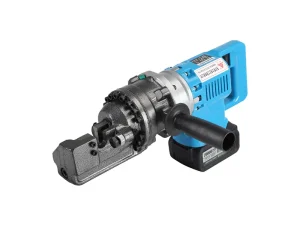
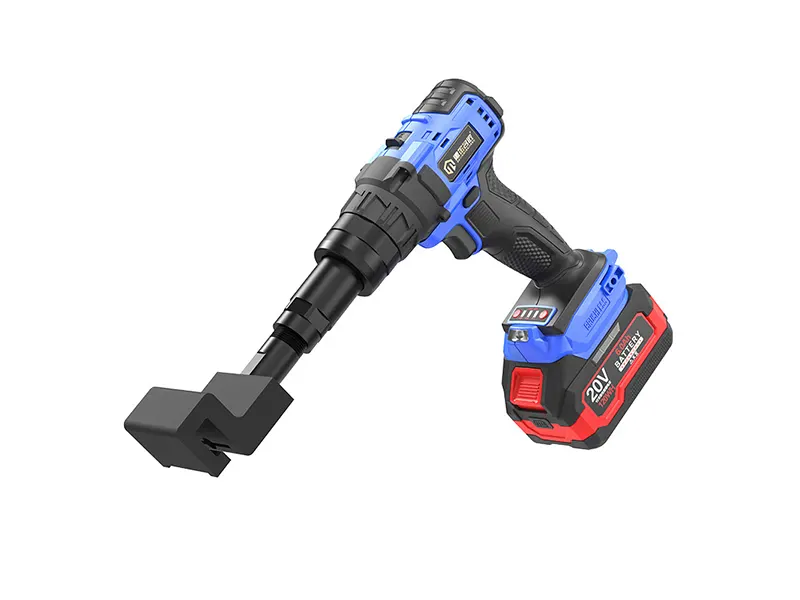
The DEJIN MASTER C-channel and purlin series includes configurations for:
- Side-hole punching
- Bottom-hole punching
- Side-and-bottom punching applications
The first step is to match the punching face.
The next step is to compare the specific product drawing with your actual C-channel or purlin section drawing.
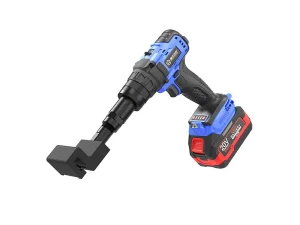
Side-Hole Configuration
For applications requiring holes through the side face of a C-section or purlin, the punch head must provide suitable side access.
You can review an example of the:
DEJIN MASTER Side-Hole Cordless Puncher for C-Sections and Purlins
The listed configuration provides an example of a 50 mm throat-depth side-hole punching arrangement.
This should be treated as an application reference rather than a universal fit statement.
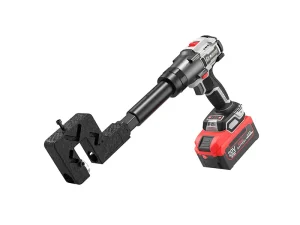
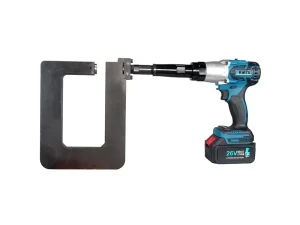
Bottom-Hole Configuration
For bottom-hole applications, the punch head needs to reach the required bottom face while providing sufficient clearance around the profile.
You can review an example of the:
DEJIN MASTER Bottom-Hole Cordless Puncher for C-Sections and Purlins
This configuration uses a 200 mm throat-depth arrangement intended for bottom-hole punching applications involving C-sections and purlins.
Again, the listed throat depth should not be treated as confirmation that every C-channel or purlin will fit.
Review the Complete C-Channel and Purlin Series
For projects involving different punching positions, review the complete:
DEJIN MASTER C-Channel and Purlin Cordless Puncher Series
If the job requires more than one hole position, provide every required punching face and hole layout.
Do not assume that one punch head will automatically cover every side and bottom punching requirement.
What If the Project Requires Both Side and Bottom Holes?
Some projects require multiple hole positions on the same profile.
For example, a C-channel may require:
- Side holes for one connection
- Bottom holes for another connection
- Different hole sizes
- Different hole spacing
- Multiple profile dimensions
Provide the Complete Hole Layout
When more than one punching position is required, send a drawing showing:
- Every punching face
- Every hole position
- Hole dimensions
- Hole spacing
- Reference dimensions
- Profile dimensions
This allows the supplier to determine whether one configuration can address the requirements or whether different punch heads, dies, or other configurations should be considered.
When Should You Discuss a Custom Die or Punch Head?
A custom arrangement may need to be discussed when the application falls outside a listed configuration.
This can include situations where:
- The hole shape is non-standard
- The hole position is unusual
- The profile geometry is unusual
- The hole is located near an obstruction
- The required punching direction differs from standard configurations
- The same special hole pattern will be repeated across a project
Information Needed for a Custom Review
Provide:
- Dimensioned profile drawing
- Material type
- Material thickness
- Hole shape
- Hole dimensions
- Hole location
- Punching direction
- Expected quantity
- Photos of the application
- Physical sample, where available
A complete drawing is especially valuable when a custom punch-and-die arrangement may be required.
A Simple C-Channel and Purlin Punching Inquiry Checklist
Before requesting a quotation, check the following:
Profile
- Mark the side or bottom punching face
- Include complete C-channel or purlin section dimensions
- Show profile width and depth
- Show return lips, folds, and ribs
- State material and thickness
Hole
- Show hole shape
- Show hole size
- Show hole orientation
- Mark the hole center
- Provide reference dimensions
- Identify all required punching faces
Working Conditions
- Explain whether the work is performed on site or in a workshop
- Show available access around the profile
- Point out welds or nearby obstructions
- Provide expected punching quantity
- Explain whether the same pattern will be repeated
Get the Right Cordless Puncher Configuration for Your C-Channel or Purlin
Selecting a cordless puncher for C-channel and purlin punching starts with the hole position, not simply the material name or profile size.
The key distinction is:
Side hole → side access
Bottom hole → bottom access and deeper profile clearance
Throat depth is an important specification, but it should be evaluated together with the punch-head opening, profile dimensions, hole position, material thickness, and available clearance.
For projects requiring multiple punching positions, provide the complete hole layout rather than assuming one configuration will cover every application.
Send your C-channel or purlin drawing, material thickness, hole layout, expected quantity, and working photos to DEJIN MASTER. Our team can review the applicable series and help determine whether a listed punch head, compatible die arrangement, or custom solution should be considered for your project.