Cordless Puncher Power Options: Single Battery, Dual Battery, or DC Power?
Learn how to choose a cordless puncher power setup for on-site, multi-location, and workshop work, and understand why dual batteries and double dies are different options.
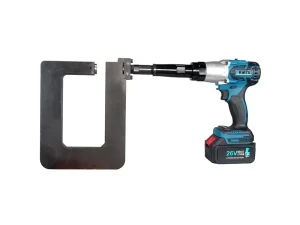
After confirming that a cordless puncher can reach the required hole position, the next question is how the tool will be powered during the job.
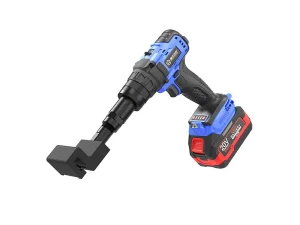
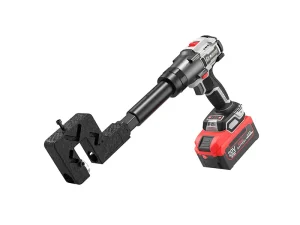
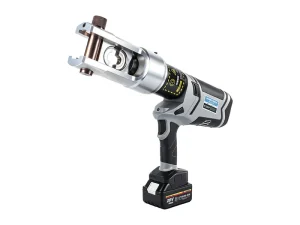
A cordless puncher may be offered with a single battery, dual batteries, or a DC power configuration. These options are not simply package choices. They should match the working location, expected working rhythm, and the way the tool will be used.
The right setup can help contractors reduce unnecessary interruptions on site while keeping the tool package appropriate for the actual task.
The best approach is to start with the working pattern rather than choosing by battery count alone.
Start With the Way You Work
Before comparing different cordless puncher power configurations, define the actual working conditions.
Where Will the Punching Work Take Place?
Consider whether the tool will be used:
- At scattered installation locations
- Across multiple job sites
- At a fixed workshop station
- In elevated or restricted-access areas
- Near a suitable electrical power source
A highly mobile installation job may have different power requirements from a workshop-based production process.
How Frequently Will the Tool Be Used?
The expected punching frequency is also important.
Ask:
- Is punching occasional?
- Will the operator make repeated holes throughout the day?
- Will the tool be used continuously for long periods?
- Are there long intervals between individual punching operations?
These questions help determine whether a simple single-battery setup is sufficient or whether another power configuration should be considered.
The final choice should also take into account the punch head, material, thickness, hole size, hole shape, and required punching configuration for the selected model.
Single-Battery Cordless Puncher Setup
A single-battery cordless puncher is a practical starting point for short, intermittent, or relatively low-volume punching tasks.
It can be suitable for:
- Inspection and maintenance work
- Small installation jobs
- On-site adjustments
- Occasional hole punching
- Jobs where the tool is frequently transported between locations
Main Advantage: Mobility
The primary benefit of a single-battery configuration is simplicity and portability.
The operator can take the tool directly to the workpiece without arranging a power cable or establishing a fixed working station.
For contractors who only need to make holes occasionally, carrying a more extensive power package may not provide a meaningful advantage.
When Should You Consider Another Battery?
The workload should be evaluated realistically.
If the tool is expected to perform repeated punching operations with limited downtime, a single battery may create interruptions when charging becomes necessary.
In this situation, a second battery or another suitable power configuration may better match the working rhythm.
The actual battery capacity, charging time, material, thickness, hole size, and punching frequency should be checked against the specifications of the selected model.
Dual-Battery Cordless Puncher Setup
A dual-battery configuration can be useful for mobile site work where the operator expects repeated punching throughout the working day.
The second battery can help maintain a smoother working rhythm by allowing one battery to be charged or prepared while the other is being used.
Suitable for Repeated On-Site Work
Dual-battery configurations may be considered for installation teams working across larger areas, including applications involving:
- Steel structures
- C-sections
- Purlins
- Cable-tray runs
- Bracket assemblies
- Repeated installation points
In these situations, mobility remains important, but reducing charging-related interruptions can also become a priority.
What Dual Batteries Do Not Change
A dual-battery package does not change the punching capability of the punch head.
It does not automatically provide:
- Greater punching capacity
- Longer punch reach
- A larger hole size
- Compatibility with additional materials
- A universal solution for different profiles
Instead, the second battery supports a longer or less interrupted mobile working routine.
The punch head, die, material capacity, and hole requirements must still match the actual application.
What to Check in a Dual-Battery Package
When comparing dual-battery configurations, confirm:
- Battery type
- Battery capacity
- Charger arrangement
- Charging requirements
- Model compatibility
- Included accessories
- Applicable punch and die configuration
Battery configurations may differ between product versions, so the package should be confirmed with the supplier before ordering.
DC Power Configuration for Fixed or Repeated Work
A DC power configuration may be worth considering when punching is performed at a relatively fixed location with a suitable power source.
Unlike a battery-focused setup, the priority here is not maximum mobility. Instead, the configuration can support a more stable workshop-style process.
When DC Power Can Be Practical
A DC-powered setup may be considered for:
- Repetitive hole patterns
- Pre-assembly operations
- Workshop production
- Fixed workstations
- Applications where the workpiece is brought to the tool
For example, if operators repeatedly process similar profiles at a designated workstation, maintaining a suitable power connection may be more practical than managing multiple batteries.
DC Power Is Not Automatically Better
The choice should not be based on the assumption that DC power is always more efficient.
The key question is:
Does the working pattern benefit from a fixed power arrangement?
If the operator needs to move continuously between different installation points, a battery-powered configuration may provide greater practical flexibility.
Before choosing a DC configuration, confirm:
- Available power conditions
- DC voltage requirements
- Adapter compatibility
- Selected tool model
- Working environment
- Expected production rhythm
The applicable specifications should be confirmed with the supplier before purchase.
Dual Battery and Double Dies Are Not the Same
One common purchasing mistake is confusing dual batteries with double dies.
These terms refer to completely different parts of the tool package.
What Does Dual Battery Mean?
Dual battery refers to the power supply configuration.
Its purpose is to support a more continuous mobile working routine and reduce interruptions associated with charging.
It relates to how the tool is powered.
What Do Double Dies Mean?
Double dies refers to the punch-and-die arrangement supplied with the tool.
It relates to the hole specification and punching setup, rather than the amount of available battery power.
For example, a particular application may require different die sizes or compatible punching configurations depending on the required hole dimensions.
Why the Difference Matters
A buyer may need:
- Dual batteries with one punch-and-die configuration
- One battery with a specific die arrangement
- Multiple compatible dies for different hole specifications
- A different combination depending on the selected model
Therefore, double dies do not mean extra batteries, and dual batteries do not mean that multiple dies are automatically included.
Always check the complete product configuration instead of relying on package terminology alone.
How to Choose the Right Cordless Puncher Power Setup
A practical way to select the configuration is to match the power option to the working environment.
Working Condition | Power Configuration to Consider |
Occasional punching | Single battery |
Small installation jobs | Single battery |
Frequent mobile punching | Dual battery |
Large-area installation work | Dual battery |
Fixed workshop station | DC power |
Repetitive production process | DC power |
Multiple remote working locations | Battery-powered configuration |
This table is only a starting point. The final selection must also consider the specific puncher model, material, thickness, hole requirements, and die configuration.
What to Confirm Before Ordering a Cordless Puncher
Before requesting a quotation or placing an order, prepare the following information.
1. Working Location
Tell the supplier whether the tool will be used:
- On a construction site
- In a workshop
- At elevated positions
- In restricted spaces
- Across multiple locations
2. Working Frequency
Explain whether punching is:
- Occasional
- Intermittent
- Repeated throughout the day
- Part of a continuous production process
3. Material and Profile Information
Provide:
- Material type
- Material thickness
- Profile shape
- Profile dimensions
- Profile drawing, if available
4. Hole Requirements
Specify:
- Hole shape
- Hole size
- Hole position
- Required punching quantity
- Whether multiple hole specifications are needed
5. Power Requirements
Confirm:
- Single battery or dual battery
- Battery capacity
- Charger requirements
- Available DC power
- Adapter requirements
- Whether the tool needs to remain mobile
This information allows the supplier to evaluate the punching configuration and power configuration separately.
Choose the Power Package Around the Job
Single-battery, dual-battery, and DC configurations each have a practical role.
A single-battery cordless puncher can be suitable for mobile and intermittent work where simplicity and portability are important.
A dual-battery configuration can support a more continuous mobile working rhythm when repeated punching is expected throughout the day.
A DC power configuration can be considered for fixed workstations and repetitive processes where mobility is less important.
However, the power configuration is only one part of the purchasing decision. The punch head, die arrangement, material capacity, profile geometry, hole size, hole position, and actual working conditions must also be considered.
The final choice should be checked against the specific DEJIN MASTER cordless puncher model and the complete punching requirements.
Send your work location, expected punching frequency, material details, profile drawing, hole requirements, and preferred power setup to DEJIN MASTER. Our team can help review the applicable tool, punch-and-die configuration, and power package for your project.